Tag: spirituality

  • What are You Curious About?

    Daily writing prompt
    What are you curious about?

    It’s a beautiful Monday morning here in Hawaii, the kind that makes you pause and really feel the world around you. And as I sit here, sipping my juice and watching the palm trees sway, a question keeps echoing in my mind: What am I curious about?

    ​It’s a simple question on the surface, but for me, it unlocks a Pandora’s Box of profound ponderings. My curiosity, you see, isn’t focused on the latest gadget or a celebrity’s scandal. It delves into the very fabric of existence, the mysteries that have captivated humanity since time immemorial.

    ​First and foremost, I am profoundly curious about what lies beyond this life. Is life truly eternal after this world? We spend our days striving, loving, learning, experiencing, and then… what? The idea of an ultimate cessation, an absolute end to consciousness, feels almost too stark to comprehend. Is there a continuation, a grand transition, or perhaps a different form of existence that we, in our current limited perception, simply cannot fathom? I find myself endlessly fascinated by the myriad spiritual and philosophical traditions that grapple with this question, each offering a unique lens through which to view the great unknown. The concept of a soul, of an essence that transcends the physical body, resonates deeply with me, not as a definitive answer, but as a compelling possibility that fuels my inquisitiveness.

    ​And then, just as my mind grapples with the eternal, it takes a sharp turn into the realm of the digital: are we living in a simulation? This isn’t just a science fiction trope anymore; it’s a legitimate philosophical and even scientific inquiry. The idea that our entire reality, every sensation, every thought, every memory, could be an incredibly sophisticated computer program is both unsettling and, in a strange way, exhilarating. If our universe is a meticulously crafted simulation, who are the programmers? Are they advanced civilizations from another “real” dimension, perhaps exploring possibilities, running experiments, or even creating art on an unimaginable scale? The implications are staggering, forcing us to re-evaluate our understanding of reality, free will, and even our own significance. If our world is a simulation, does it diminish our experiences, or does it imbue them with an even greater sense of wonder, knowing that everything around us is a masterpiece of code?

    ​This brings me to my third, and perhaps most encompassing, curiosity: Is there indeed a God, or a group of highly evolved beings responsible for our lives? If we are in a simulation, then the programmers could very well be these “highly evolved beings.” And if not a simulation, the concept of a divine creator or an ultimate consciousness that orchestrated the cosmos is a question that transcends cultures and millennia. Is there an intelligent design behind the intricate dance of galaxies and the delicate balance of life on Earth? Is there a grand architect, a cosmic consciousness, or perhaps a collective of incredibly advanced entities who, through their wisdom and power, brought forth existence as we know it? My curiosity here isn’t rooted in a desire for dogmatic answers, but rather a yearning to understand the ultimate source, the fundamental origin of all that is.

    ​Here’s where my curiosities beautifully intertwine: the resurrection of the dead. For many, this is a strictly religious concept, often seen in conflict with scientific understanding. But what if we consider it through the lens of a simulation? If our reality is indeed a computer program, then the resurrection of the dead has no inherent conflict with the theory of simulation. In a simulated environment, “death” could simply be a program ending, a character logging off. “Resurrection,” then, could be akin to reloading a saved game, reactivating a program, or even migrating a consciousness to a new instance within the simulation. The “highly evolved beings” or “programmers” would certainly possess the capability to store and retrieve data, to re-instantiate life, even to modify the parameters of the simulation to allow for such an event. The laws of physics, as we understand them, might simply be the rules of the game within this simulation, and those who created the game could certainly bend or break those rules at will. From this perspective, resurrection isn’t a miracle that defies logic, but rather an advanced function within an incredibly complex system. It shifts from a purely faith-based belief to a scientifically plausible, albeit currently unfathomable, possibility within a simulated reality.

    ​These are the thoughts that keep me up at night, the questions that make my mind hum with a delicious blend of wonder and intrigue. I don’t expect to find definitive answers in this lifetime, but the journey of asking, of exploring these profound possibilities, is a reward in itself. It keeps my mind open, my spirit alive, and my curiosity endlessly stimulated. And perhaps, that’s the greatest gift of all.

  • What Do You Think Gets Better With Age?

    Daily writing prompt
    What do you think gets better with age?

    Navigating the labyrinth of life often feels like a frantic scramble in our younger years. We’re bombarded with choices, riddled with insecurities, and haunted by an ambiguous future. But what if I told you that one of the most profound and comforting truths about life is that it gets better with age? Not in the sense of fewer wrinkles or boundless energy, but in a far more significant way: our perspective.


    With each passing year, as the kaleidoscope of experiences shifts and settles, our perspective on life, on ourselves, and on the world around us becomes clearer, sharper, and infinitely more valuable. It’s a subtle, almost imperceptible transformation, like the slow, steady polishing of a gemstone, revealing its inherent brilliance.


    The Fading of Future Anxiety


    One of the most liberating aspects of this evolving perspective is the way it tames the beast of future anxiety. In our youth, the future looms large and menacing, a vast, uncharted territory filled with an infinite number of terrifying “what ifs.” Will I find the right career? Will I find love? Will I be successful? This ambiguity, this lack of clarity, can be paralyzing. However, as we age, we gather data points. We experience failures and successes, heartbreaks and joys. We learn that while life rarely follows a perfectly straight line, it does tend to bend in predictable ways. We realize that most of the “what ifs” we agonized over either never materialized, or we developed the resilience to navigate them. The future doesn’t become entirely transparent, but its edges soften, its contours become more defined, and its inherent uncertainty feels less like a threat and more like an open invitation.


    Firm Decisions and Unwavering Choices


    This newfound clarity also extends to our personal choices and decisions. The insecurity that plagued our younger selves, leading to endless second-guessing and a desperate need for external validation, gradually recedes. In our twenties, every decision – from what to wear to what career path to pursue – felt like a life-or-death pronouncement. We’d agonize for hours, seeking approval from friends, family, and even strangers on the internet. But with age comes a deep well of self-trust. We’ve made enough good decisions, and enough “bad” ones (which, in hindsight, often turn out to be valuable learning experiences), to understand our own compass. Our values become more deeply ingrained, our priorities crystallize, and our understanding of our own strengths and weaknesses becomes more acute.


    Consequently, our decisions become more firm. We learn to listen to our own inner voice, to trust our instincts, and to stand by our choices, even when they’re unpopular. This isn’t about stubbornness; it’s about conviction. It’s the quiet confidence that comes from having weathered enough storms to know you’re capable of handling whatever comes next. It’s the realization that while external opinions may offer insights, the ultimate responsibility and wisdom lie within.


    Embracing Self-Acceptance


    Perhaps one of the most profound gifts of aging is the profound blossoming of self-acceptance. In our earlier years, we’re often caught in a relentless cycle of comparison, striving to meet external ideals and constantly finding ourselves lacking. We scrutinize our flaws, amplify our perceived shortcomings, and beat ourselves up for every misstep. But as we accumulate life experience, we begin to understand that perfection is an illusion and that our imperfections are, in fact, integral to who we are. We start to embrace our unique quirks, our strengths, and yes, even our weaknesses, with a newfound gentleness. The relentless pursuit of an unattainable ideal gives way to a compassionate understanding of our authentic selves. We learn to forgive past mistakes, to let go of grudges (especially those we hold against ourselves), and to simply be, without the constant need for validation or external approval. This blossoming of self-acceptance fosters a profound sense of inner peace, allowing us to navigate life with greater authenticity and less emotional baggage.


    The beauty of this maturation of perspective is that it fosters a profound sense of inner peace. The relentless striving, the constant comparison, the gnawing dissatisfaction that often defines our earlier years begins to fade.

    We learn to appreciate the small victories, to find joy in the mundane, and to accept the imperfections that are an inherent part of the human experience. We become more compassionate towards ourselves and others, understanding that everyone is on their own unique journey, grappling with their own set of challenges.


    So, while the physical body may experience the inevitable wear and tear of time, the true marvel of aging lies in the profound refinement of our perspective. It is this evolving clarity, this diminishing anxiety, this strengthening of self-conviction, and this embrace of self-acceptance that truly gets better with age, making the later chapters of life not just tolerable, but rich, fulfilling, and deeply meaningful.


    What aspects of aging have you found to be surprisingly positive?

  • How Do You Express Your Gratitude?

    Daily writing prompt
    How do you express your gratitude?

    In our busy lives, it’s easy to overlook the simple yet profound act of expressing gratitude. Yet, acknowledging the kindness, effort, or even just the presence of others can significantly enrich our relationships and overall well-being. So, how do we effectively show our thanks? It’s often simpler and more impactful than we think.


    The Power of “Thank You”
    Sometimes, the most powerful expressions are the simplest. A genuine “thank you” can go a long way. It’s more than just a polite phrase; it’s an acknowledgment that you’ve noticed someone’s contribution and that you value it. Whether it’s for holding a door, offering a helpful suggestion, or providing significant support, a heartfelt “thank you” shows you recognize their effort. Don’t underestimate its impact – it can brighten someone’s day and reinforce positive connections.


    The Spiritual Connection: Prayer
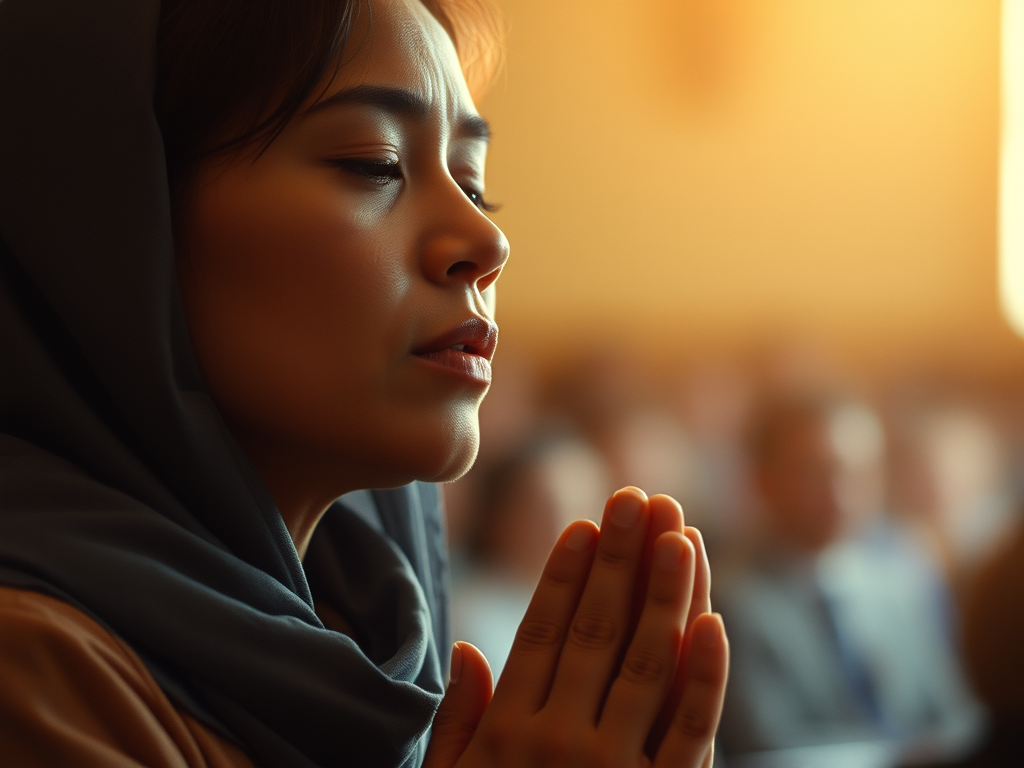
    For many, gratitude extends beyond words to a more spiritual realm. Praying for someone who has helped you, or for a situation you’re grateful for, is a deeply personal and meaningful way to express thanks. This act can be a quiet acknowledgment of the blessings in your life and a way to send positive energy or well wishes towards those who have impacted you. It’s a powerful internal expression that can bring a sense of peace and reinforce your appreciation.


    Elevating Appreciation with “I Appreciate You”


    While “thank you” is effective, taking it a step further with “I appreciate you” adds another layer of depth. This phrase shifts the focus from the action to the person themselves. When you say “I appreciate you,” you’re not just thanking them for what they did, but for who they are and the value they bring. It’s a recognition of their inherent worth and impact, making the expression of gratitude more personal and profound. This can foster a stronger connection and make the other person feel truly seen and valued.


    Ultimately, expressing gratitude isn’t about grand gestures; it’s about genuine acknowledgment. Whether through simple words, thoughtful prayers, or direct affirmations, taking the time to show your thanks can cultivate deeper connections and a more positive outlook for everyone involved.


    What are some other ways you like to show your gratitude?

  • How Important is Spirituality In Your Life?

    Daily writing prompt
    How important is spirituality in your life?

    The blank page stares back at me, silently asking, “How important is spirituality in your life?” I pause, not because I need to search for an answer, but because I need to find the words to adequately describe something so deeply ingrained, so intrinsically woven into the fabric of my being. The truth is, spirituality isn’t just “important” to me; it is my life. It’s the lens through which I perceive the world, the wellspring from which my actions flow, and the quiet assurance that guides me forward.


    Every Thought a Prayer


    For me, spirituality isn’t confined to a specific time or place, nor is it limited to formal rituals or organized religion. Instead, it’s a living, breathing current that flows through every moment. So much so that I consider every single thought a prayer. Yes, you read that right—every thought is a prayer. It’s a conscious acknowledgment that my inner world has immense power, that the vibrations I send out, whether positive or negative, have an impact.


    This isn’t just a poetic notion; it’s a fundamental principle I live by. When I’m brainstorming a new idea, I’m praying for clarity and inspiration. When I’m feeling grateful, I’m sending out a prayer of thanks. When I’m facing a challenge, I’m praying for strength and guidance. There’s no filter, no censor; it’s a continuous, unedited dialogue with the universe. I believe that these thoughts, these silent petitions, are constantly being transmitted, like radio waves emanating from my mind, reaching out into the vastness of existence.


    Manifesting My Reality


    And why do I send these thoughts, these prayers, out into the universe? Because I truly believe they will come back to me, manifested. This isn’t about wishful thinking or passive waiting. It’s about actively co-creating my reality. If I consistently focus on abundance, joy, and peace, then I expect to see those qualities reflected in my life. Conversely, if I dwell on lack, negativity, or fear, then that’s often what I experience.


    This understanding has profoundly shifted my perspective. It’s made me incredibly mindful of what I allow into my mind, what narratives I repeat, and what emotions I cultivate. It’s not about being naive or ignoring challenges, but rather about choosing how I respond to them and what energy I choose to feed. It’s about recognizing that I have a powerful role in shaping my experiences, and that my internal landscape directly influences my external reality.


    The Anchor of Daily Meditation


    To strengthen this connection, to refine the signal of my internal prayers, I meditate every single day. Meditation isn’t a chore; it’s a sanctuary, a sacred pause in the busyness of life. It’s during these moments of stillness that I can quiet the incessant chatter of the mind and truly listen. It’s where I can align my thoughts with my deepest desires, releasing any limiting beliefs or negative patterns that might be hindering my manifestations.


    My meditation practice varies. Sometimes it’s a guided journey, sometimes it’s simply focusing on my breath, and other times it’s sitting in silent contemplation, just being. Regardless of the form, the purpose remains the same: to cultivate inner peace, to heighten my awareness, and to deepen my connection to the universal source. It’s an act of self-care, a spiritual workout that strengthens my ability to consciously create and receive.


    In essence, spirituality isn’t a separate compartment in my life; it is my life. It’s the constant flow of thought-prayers, the unwavering belief in manifestation, and the grounding practice of daily meditation. It’s a journey of self-discovery and co-creation, and one that I wouldn’t trade for anything.

  • Do you practice religion?

    Daily writing prompt
    Do you practice religion?

    The question “Do you practice religion?” often elicits a simple “yes” or “no.” For me, however, the answer is far more nuanced, a vibrant tapestry woven from threads of diverse spiritual traditions. I find myself on a unique journey, one that embraces the familiar comfort of Catholicism while also exploring the profound wisdom found in other spiritual paths.


    At its core, my religious practice is deeply rooted in Catholicism. Sundays often find me in the quiet contemplation of Mass, participating in the ancient rituals that have shaped generations. My nights conclude with the familiar cadence of prayer: the Lord’s Prayer, the Hail Mary, the Apostle’s Creed, and the Glory Be. These prayers are more than just words; they are a connection to a rich heritage, a dialogue with the divine that brings a sense of peace and grounding. My belief in angels, and their guiding presence in our daily lives, is a comforting constant. I find solace and strength in seeking intercession from the saints, from Mary, and in direct communion with Jesus and the Holy Spirit.


    Beyond Catholic Traditions: A Universal Divine


    Yet, my spiritual landscape extends beyond the confines of a single doctrine. I also deeply resonate with the principles of karmic spirituality. The idea that our actions, both positive and negative, ripple outwards and return to us, fosters a profound sense of responsibility and mindfulness in my daily life. It encourages me to strive for compassion, kindness, and understanding, recognizing that every interaction contributes to the energetic fabric of the universe.


    Furthermore, my spiritual curiosity has led me to explore the vastness of other traditions. I find immense wisdom in the concept of the “Great Beyond” and the profound teachings of Brahman, recognizing a universal consciousness that transcends individual forms. The gentle and insightful philosophy of Buddha, particularly regarding suffering, impermanence, and the path to enlightenment, offers a powerful framework for navigating life’s challenges.


    Perhaps what might seem like a contradiction to some – believing in life everlasting and in reincarnation – feels, to me, like two sides of the same divine coin. The idea of a soul’s enduring journey, whether in a continuous spiritual realm or through successive earthly incarnations, speaks to a boundless and evolving spiritual existence.


    Finding God in Everything


    A particularly profound aspect of my belief system, one that resonates deeply with Islamic perspectives, is the conviction that God is in everything. This isn’t just an abstract concept; it’s a felt presence in the rustle of leaves, the warmth of the sun, the intricate patterns of a snowflake, and the kindness in a stranger’s eyes. It means recognizing the divine immanence in every atom of existence, blurring the lines between the sacred and the mundane. This perspective enriches my appreciation for the world around me and deepens my sense of interconnectedness with all creation.


    Of course, the Bible holds a cherished place in my understanding of faith. Its stories offer timeless lessons on morality, human nature, and the divine’s interaction with humanity. However, my “thing for other religions” isn’t about questioning or diminishing my Catholic faith, but rather about enriching it. It’s about recognizing the universal truths that echo across different spiritual expressions, the shared human yearning for meaning, connection, and transcendence.


    My spiritual path is not a rigid set of rules, but an ongoing exploration, a continuous dialogue with the divine in its myriad forms. It is a journey of discovery, blending tradition with personal revelation, and finding unity in the beautiful diversity of human spirituality. For me, “practicing religion” isn’t about choosing one path over another, but rather about embracing the profound wisdom that illuminates them all.

  • “Soul”: The Symphony of Everyday Living

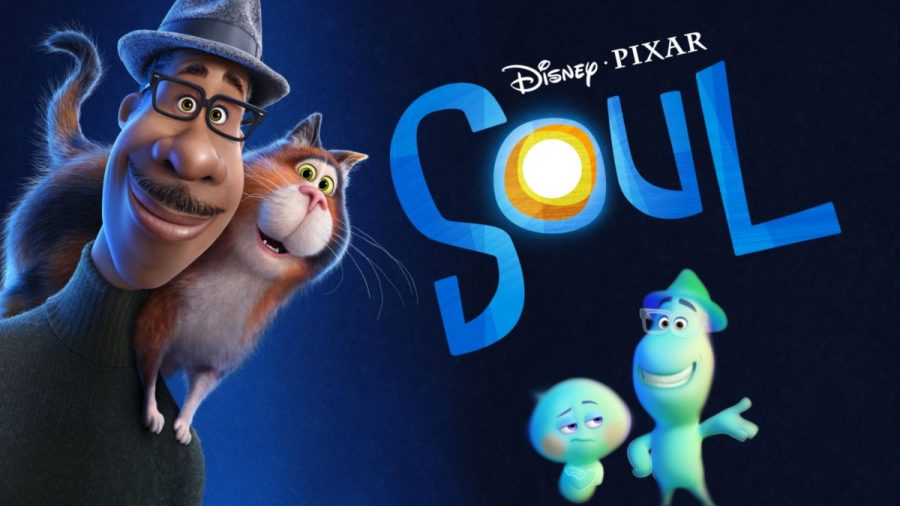
    Pixar has long been a master of blending heartfelt storytelling with profound philosophical questions, and their 2020 animated feature, Soul, is no exception. Directed by Pete Docter and Kemp Powers, this visually stunning and emotionally rich film takes audiences on an existential journey that challenges conventional notions of purpose and happiness, ultimately celebrating the quiet beauty found in simply living.

    The story centers on Joe Gardner (voiced by Jamie Foxx), a middle school band teacher with a lifelong dream of becoming a professional jazz pianist. Just as he finally gets his big break, a sudden accident sends his soul to the “Great Before” – a fantastical realm where new souls develop their personalities and “spark” before heading to Earth. There, Joe reluctantly teams up with 22 (voiced by Tina Fey), a cynical soul who has yet to find her spark and has no desire to go to Earth. Their unlikely partnership forms the core of a narrative that explores life, death, and everything in between.

    One of the most powerful messages Soul imparts is about not being hung up on a singular purpose in life. Joe’s entire identity is wrapped up in his dream of being a jazz musician. He believes that achieving this one grand goal is the only way he can truly live and find fulfillment. The film masterfully deconstructs this idea, showing how such an intense focus can blind one to the richness of existence. Through his interactions with 22, and his own unexpected journey, Joe begins to understand that a “spark” isn’t a predetermined life purpose or a specific talent. It’s not about what you do for a living, but how you live. The film gently suggests that while passions are important, defining one’s entire worth by a single ambition can be a limiting and even dangerous path.

    This leads directly to the film’s most resonant theme: finding the beauty in everyday living. 22, initially resistant to life on Earth, slowly begins to experience the simple wonders of the human world through Joe’s eyes (and senses). A perfect slice of pizza, the feeling of wind, the taste of a lollipop, the warmth of a hug, the sound of leaves rustling – these seemingly mundane moments become profound revelations. It’s in these small, unassuming details that the true “spark” of life is discovered. The film argues that happiness isn’t found solely in monumental achievements or grand purposes, but in the accumulation of these quiet, sensory experiences that make up the fabric of our daily lives.

    From my perspective, Soul is a profound and necessary film for our achievement-driven society. It’s a beautiful reminder that life isn’t a checklist of accomplishments to be completed, but a journey to be experienced. The film’s animation is, as expected from Pixar, breathtaking, with vibrant colors in the “Great Before” contrasting with the gritty realism of New York City. The jazz score is also a character in itself, perfectly complementing Joe’s passion and the film’s soulful atmosphere.

    In conclusion, Soul is a poignant and deeply moving exploration of what it means to be alive. It encourages us to release the pressure of finding one definitive “purpose” and instead embrace the countless small joys that make life worth living. It’s a film that leaves you with a renewed appreciation for the present moment, reminding us that every day, in its simplicity, holds the potential for a perfect, sparkling experience.