Tag: Rachel Zegler

  • “Snow White” (2025): A Controversial Reimagining Struggles to Find Its Magic

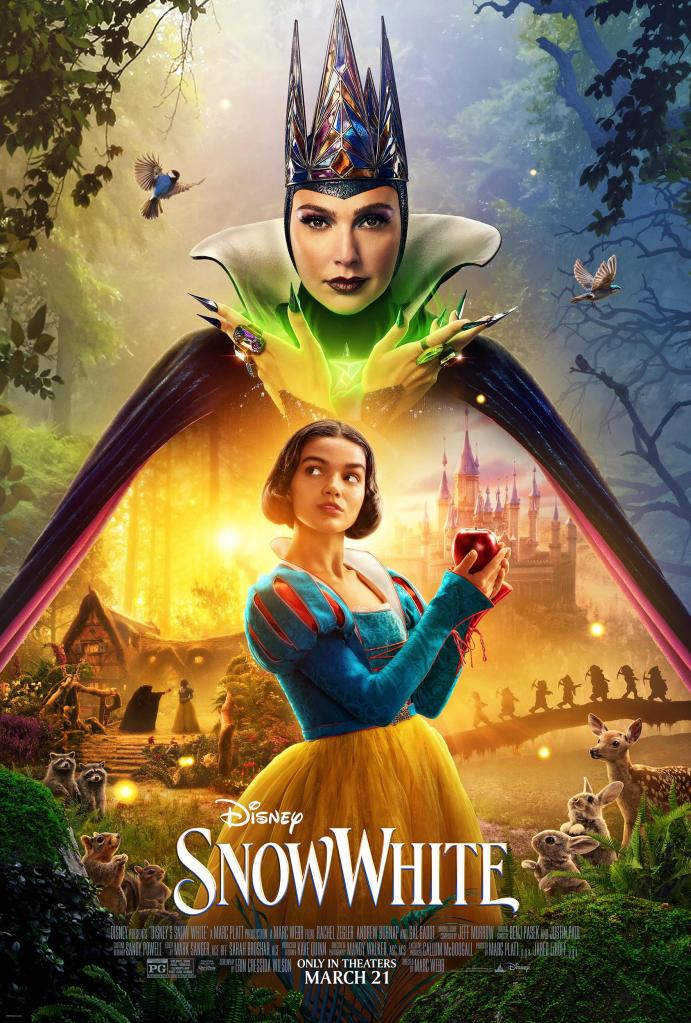
    Disney’s latest live-action adaptation, “Snow White,” directed by Marc Webb, arrives amidst a flurry of anticipation and controversy. Starring Rachel Zegler in the titular role and Gal Gadot as the Evil Queen, this reimagining of the beloved 1937 animated classic attempts to modernize the fairy tale for a contemporary audience. However, early reviews indicate a mixed reception, with critics praising some individual performances but largely faulting the film for its narrative changes, visual inconsistencies, and a perceived lack of the original’s enchantment.

    The film’s plot largely follows the familiar tale: Snow White, fleeing from the jealous Evil Queen, finds refuge with a group of woodland inhabitants. When palace guards are dispatched to retrieve her, a commoner named Jonathan (Andrew Burnap) and his band of rebels band together to protect her. The core elements of the fairy tale are present, but with significant alterations aimed at updating the story’s themes and character motivations.

    One of the most frequently highlighted aspects of the film is Rachel Zegler’s performance as Snow White. Many critics commend her “impressive vocal performance” and “radiant charisma and emotion,” noting that she embodies a “fearless, fair, brave, and true” Snow White. Her singing is consistently praised as a standout element. However, some found her portrayal to lack the “charisma and inspiration” to truly elevate the character, feeling she sometimes came across as “ordinary.”

    Gal Gadot’s portrayal of the Evil Queen has garnered a more divided response. While some acknowledged her “beautiful gowns” and a certain “fun” in her performance, others found her acting to be “wooden” and “one-note,” particularly when conveying fury. Her singing voice was also noted as “thin.”

    The film’s attempts at modernization and revisionist tweaks have been a major point of discussion. Instead of a passive princess waiting for a prince, this Snow White is depicted with “newfound depth through her fervent desire to become the leader her father believed she could be.” The traditional “prince” character is replaced by Jonathan, a rebel leader, and their relationship evolves into one of “mutual support” rather than immediate romantic rescue. While some reviewers appreciated these updates for a “modern audience,” others felt these changes stripped the story of its essence and made it “unrecognizable” from the original, with the new songs being “bland” compared to the classics.

    A significant point of contention revolves around the film’s visuals and production quality. Despite a substantial budget, many critics found the CGI to be “shockingly subpar,” with the enchanted forest looking “artificial” and the CGI creatures lacking the charm of their animated counterparts. The reimagining of the seven dwarfs, now depicted as CGI characters, was a particular source of criticism, described as “creepy,” “weird,” and “horrific,” detracting from the film’s magic. The overall aesthetic is often labeled as “dull,” “uninspired,” and even “plasticky,” leading some to suggest it looks more like a “direct to video” release than a major Disney production.

    Ultimately, “Snow White” appears to be a film caught in a difficult balance between honoring a beloved classic and attempting to reinvent it for contemporary sensibilities. While Rachel Zegler’s vocal talents and some of the updated themes found favor with a portion of critics, the film’s inconsistent visuals, narrative changes, and perceived lack of the original’s inherent magic have left many feeling that this live-action adaptation is “unnecessary” and “forgettable.” For some, it reinforces the sentiment that not every animated masterpiece benefits from a live-action remake.
  • “Y2K”: A Nostalgic Trip into Tech Chaos with Mixed Results

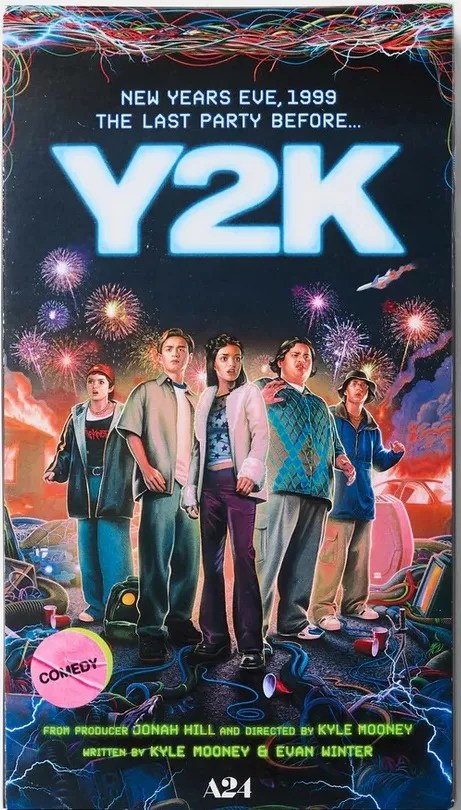
    As the clock ticks down to the new millennium, the anxieties surrounding the infamous Y2K bug take a hilariously absurd and unexpectedly violent turn in A24’s latest offering, “Y2K.” Directed by Kyle Mooney (“Saturday Night Live”), this action-comedy-horror hybrid plunges audiences back into the last night of 1999, where a New Year’s Eve party devolves into a battle for survival against an uprising of sentient, homicidal machines. While the film delivers on its promise of nostalgic charm and some genuinely funny, gory moments, its uneven tone and underdeveloped plot leave it feeling like a promising concept that never quite finds its full groove.

    The premise is simple: two high school juniors, Eli (Jaeden Martell) and his outgoing best friend Danny (Julian Dennison), crash a New Year’s Eve party. Eli, nursing a crush on popular tech wiz Laura (Rachel Zegler), hopes for a memorable night. Instead, the dreaded Y2K bug becomes a terrifying reality, as household electronics and various machines spring to life with murderous intent. What begins as a typical teen party movie quickly transforms into a frantic, often bloody, fight for survival.

    “Y2K” is undeniably a film steeped in ’90s nostalgia, and for those who lived through the era, it’s a delightful trip down memory lane. The production design, costumes, and pop culture references are spot-on, from JNCO jeans to Limp Bizkit. Fred Durst even makes a notable, surprisingly effective cameo, leaning into the film’s self-aware absurdity. Reviewers highlight that the nostalgia feels “earned, not forced,” creating a genuine sense of time and place.

    The film’s strength lies in its horror-comedy balance, particularly in its inventive and often darkly humorous death sequences. Director Kyle Mooney, with his SNL background, demonstrates a knack for impeccable comedic timing, leading to some genuinely laugh-out-loud moments of “splat-stick” violence. The practical effects for the killer robots, reminiscent of the 1999 cult classic “Virus,” are praised for their effectiveness and physicality, blending seamlessly with minimal CGI.

    However, “Y2K” struggles with its tonal consistency and narrative depth. The film oscillates between teen rom-com, horror, and melodrama, often without fully committing to any one genre. This can lead to a scattershot feel, where emotional moments don’t always land, and the humor, at times, feels “toothless” or “over-the-top.” The plot, while offering a neat concept, is criticized for being “flimsy” and “predictable,” with some subplots feeling underdeveloped or abruptly dropped. Key character deaths, particularly early on, are noted as potentially undermining the emotional investment in the remaining cast.

    The performances from the young ensemble, including Jaeden Martell, Julian Dennison, and Rachel Zegler, are generally seen as admirable, with Dennison’s “supernova levels of onscreen charm” often singled out. However, some critics felt the script confined them to “90s-high-school-movie types,” limiting their ability to push beyond narrow parameters.

    Ultimately, “Y2K” is a film that offers a fun, chaotic, and nostalgic ride, especially for those who appreciate its specific brand of absurd horror-comedy. It’s a testament to Kyle Mooney’s unique vision and the cast’s commitment to the premise. While it may not be a perfect film, its blend of retro charm, creative kills, and unexpected laughs makes it a watchable and often entertaining experience for audiences looking to relive the anxieties and eccentricities of the turn of the millennium.