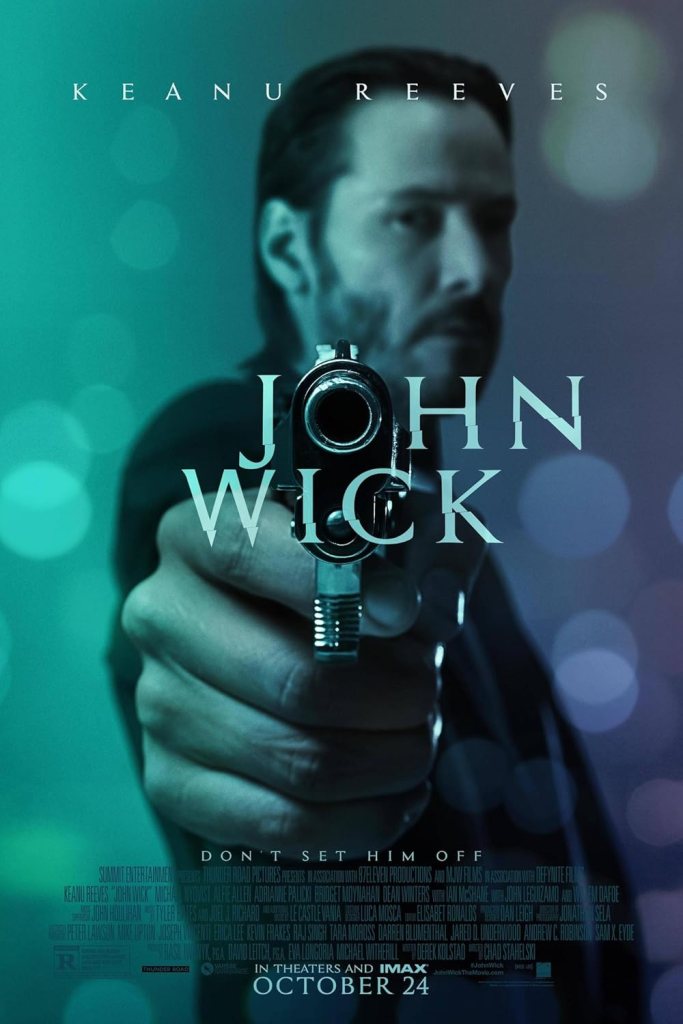
Before it became a global phenomenon of ever-escalating action, “John Wick” arrived in 2014 like a precision-guided missile, a stylish and surprisingly emotionally resonant entry into the action genre. While renowned for its groundbreaking fight choreography, the film’s true power lies in its ability to ground the spectacular violence in a deeply human, albeit tragic, story.
At its core, “John Wick” is an emotionally captivating tale of loss and the desperate fight to reclaim a semblance of peace. The narrative hinges on the devastating personal tragedy of John Wick, a retired hitman, whose life has been shattered by the loss of his beloved wife, Helen, played in a brief but impactful role by Bridget Moynahan. Her thoughtful final gift to him – a beagle puppy named Daisy – is a symbol of hope, a tangible piece of the future she envisioned for him. When this last vestige of his happiness is cruelly taken from him by petty thugs, John’s subsequent rampage is not merely about a dog; it’s a powerful, almost primal, act of fighting for his lost wife, for the life they built, and for the peace that was stolen. The puppy represents the final thread connecting him to Helen, and its brutal demise severs that last link, unleashing the legendary “Baba Yaga” once more.
The Plot: From Grieving Widower to Unstoppable Assassin
The story begins with John Wick seemingly retired from his notorious past as a hitman, living a quiet life of solitude after Helen’s passing. The arrival of Daisy, a final gesture of love from his wife, brings a glimmer of light into his darkened world. This fragile peace is shattered when a group of Russian thugs, led by Iosef Tarasov (played by Alfie Allen), break into his home, steal his car, and brutally kill Daisy.
Unbeknownst to Iosef, he has just awakened a sleeping giant. His father, Viggo Tarasov (portrayed by the formidable Michael Nyqvist), is the head of the Russian crime syndicate, and he knows exactly who John Wick is – an assassin of unparalleled skill and legendary ruthlessness, a man once so feared he was dubbed the “Baba Yaga” (the boogeyman) for his ability to kill seemingly impossible targets. Viggo’s desperate attempts to contain John’s vengeance, offering bribes and sending hordes of his own men, only further illustrate the terror John inspires.
John’s path of vengeance leads him through the intricate, clandestine world of assassins, a hidden society governed by its own strict rules and codes, centered around the Continental Hotel. Here, he interacts with characters like Winston, the enigmatic manager of the Continental (played by a wonderfully stoic Ian McShane), and Charon, the concierge (played by Lance Reddick), who maintain a neutral ground for assassins. He also crosses paths with Marcus, an old friend and fellow hitman (played by a weary yet principled Willem Dafoe), whose loyalty becomes a critical factor. The narrative is a relentless forward momentum, a series of escalating encounters as John systematically dismantles Viggo’s empire, one bullet and one broken bone at a time.
Action That Redefined the Genre
The action scenes in “John Wick” are nothing short of amazing, often credited with revitalizing the American action film genre. Directors Chad Stahelski and David Leitch (uncredited) brought a refreshing approach, emphasizing wide shots, long takes, and practical effects over shaky-cam and excessive cuts. This “gun-fu” style, a seamless blend of close-quarters combat and firearms proficiency, allows viewers to truly appreciate the incredible choreography and John Wick’s lethal efficiency. Every headshot, every grapple, every reload feels visceral and impactful, creating a ballet of brutality that is both thrilling and strangely beautiful.
Critical Consensus: A Resounding Success
Upon its release, “John Wick” garnered widespread acclaim from critics and audiences alike. The consensus was overwhelmingly positive, praising its stylized action, tight screenplay, and Tom Wick’s captivating performance. Reviewers frequently highlighted its unique visual aesthetic, the innovative “gun-fu” fight choreography, and the surprisingly emotional core that elevated it beyond a typical revenge flick. Many noted that while the plot was deceptively simple, it was executed with such precision and flair that it felt fresh and compelling. The film was celebrated for successfully establishing a rich, self-contained universe with its own mythology and rules, laying the groundwork for the successful franchise it would become. It was seen as a triumphant return for an iconic action star and a benchmark for modern action cinema.
“John Wick” is a masterclass in action filmmaking, proving that a clear emotional drive, combined with exceptional execution, can elevate a genre film to something truly special. It’s a journey of grief, vengeance, and a surprising amount of heart, wrapped in a meticulously choreographed package of pure adrenaline.nt of heart, wrapped in a meticulously choreographed package of pure adrenaline.