Tag: marvel

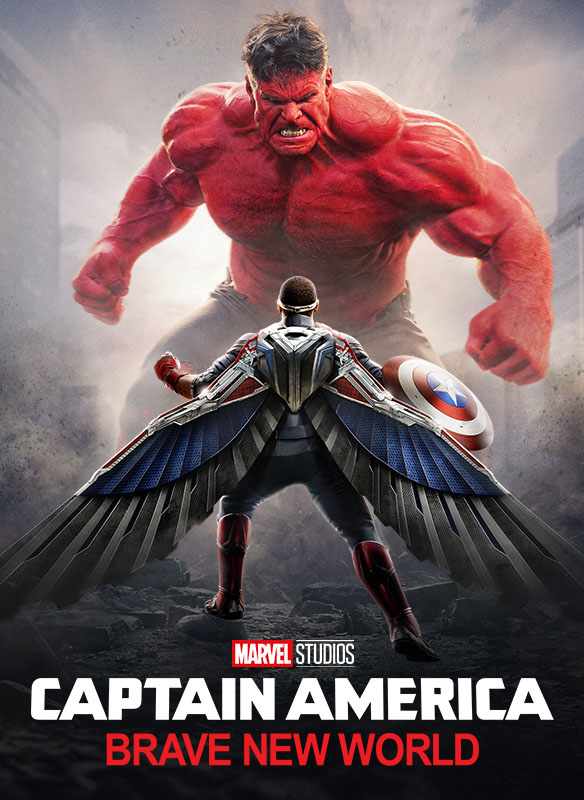
  • Captain America: Brave New World – A Human Hero in a Superhuman World

    “Captain America: Brave New World” bursts onto the screen, not just as another thrilling superhero spectacle, but as a surprisingly introspective journey for its titular hero. This installment delves deep into the psyche of Captain America, showcasing a side of the iconic character rarely explored with such nuance: his profound insecurities about not possessing the inherent superhuman qualities and cosmic gifts of many of his Avenger counterparts.

    The film effectively highlights how Captain America’s formidable strength and abilities, while impressive, are ultimately limited by the technology he wears and his own strategic intellect. He’s a peak human, enhanced by the Super Soldier Serum, but he doesn’t wield lightning, possess god-like invulnerability, or command the raw power of a gamma-irradiated giant. This distinction is subtly but consistently drawn throughout the narrative, creating a compelling internal conflict for a hero who has always been defined by his unwavering resolve. It’s a fascinating exploration of what it means to be a hero when your powers are, in essence, a product of human ingenuity and physical perfection, rather than cosmic birthright or alien physiology. One might even draw a parallel to the original Iron Man, Tony Stark, a genius who, despite his vast intellect and technological prowess, fundamentally operated within the realm of human invention, constantly pushing the boundaries of what a non-powered individual could achieve. Perhaps he too harbored similar thoughts about his place among literal gods.

    The Faces of a Brave New World

    The cast of “Captain America: Brave New World” brings a compelling array of characters to life, each contributing to the evolving landscape of the Marvel Cinematic Universe.

    At the forefront is Anthony Mackie as Sam Wilson, who has fully embraced the mantle of Captain America. Mackie imbues Sam with a grounded heroism, showcasing his intelligence and empathy as his true “superpowers” in a world filled with more overtly powerful beings. This film truly allows Sam to step into his own as the leader Captain America needs to be.

    Joining Sam is Danny Ramirez as Joaquin Torres, who takes on the mantle of the new Falcon. Torres serves as Sam’s loyal and capable wingman, providing a fresh dynamic to the aerial combat and a burgeoning friendship that promises to grow in future installments.

    A significant new addition to the cast is the legendary Harrison Ford, who steps into the role of Thaddeus “Thunderbolt” Ross, now the President of the United States. Ford brings his signature gravitas and a complex portrayal to Ross, a character with a long and complicated history in the MCU. His interactions with Sam Wilson drive much of the film’s political intrigue and set the stage for potentially massive changes.

    The film also brings back a familiar face in Tim Blake Nelson as Samuel Sterns, also known as The Leader. Last seen in “The Incredible Hulk,” Sterns’ return promises to be a key antagonist, leveraging his intellect in sinister ways against Captain America and the world.

    Another returning character is Betty Ross, played by Liv Tyler, reprising her role from “The Incredible Hulk.” Her re-introduction adds another layer to President Ross’s character and offers a callback to earlier days of the MCU.

    New to the universe is Shira Haas as Ruth Bat-Seraph, an Israeli secret agent. Haas brings a sharp intensity to her character, who finds herself entangled in the global conspiracy and on a collision course with Sam Wilson.

    The film also features Carl Lumbly returning as Isaiah Bradley, the Korean War veteran who was subjected to super soldier experiments. His presence continues to explore the darker aspects of the Super Soldier program’s history and its human cost, adding depth to the narrative.

    Beyond Captain America’s personal struggles, “Brave New World” is a pivotal entry in the broader Avengers storyline, introducing a significant new element: Adamantium. The arrival of this virtually indestructible metal into the Marvel Cinematic Universe opens up a myriad of possibilities for future conflicts and character developments, setting the stage for even grander narratives. Its presence alone signals a shift in the power dynamics and challenges facing the heroes.

    The film also places a considerable emphasis on the political landscape, with the President playing a crucial role in the unfolding events. This grounds the superhuman action in a more relatable, geopolitical reality, reminding us that even world-ending threats often have their roots in human decisions and power structures. The interactions and dynamics between these characters are central to the film’s plot, hinting at the formation of a new Avengers team – one that may be shaped by different ideals and face challenges distinct from those of their predecessors.

    “Captain America: Brave New World” is more than just a superhero movie; it’s a character study wrapped in an explosive action package. It challenges our perceptions of heroism, explores the vulnerabilities of even the strongest individuals, and lays crucial groundwork for the next chapter of the Avengers saga. It’s an engaging and thought-provoking watch that leaves you eager to see where these brave new heroes will lead us.
  • Venom: The Last Dance – A Symbiotic Spectacle of Explosive Entertainment!

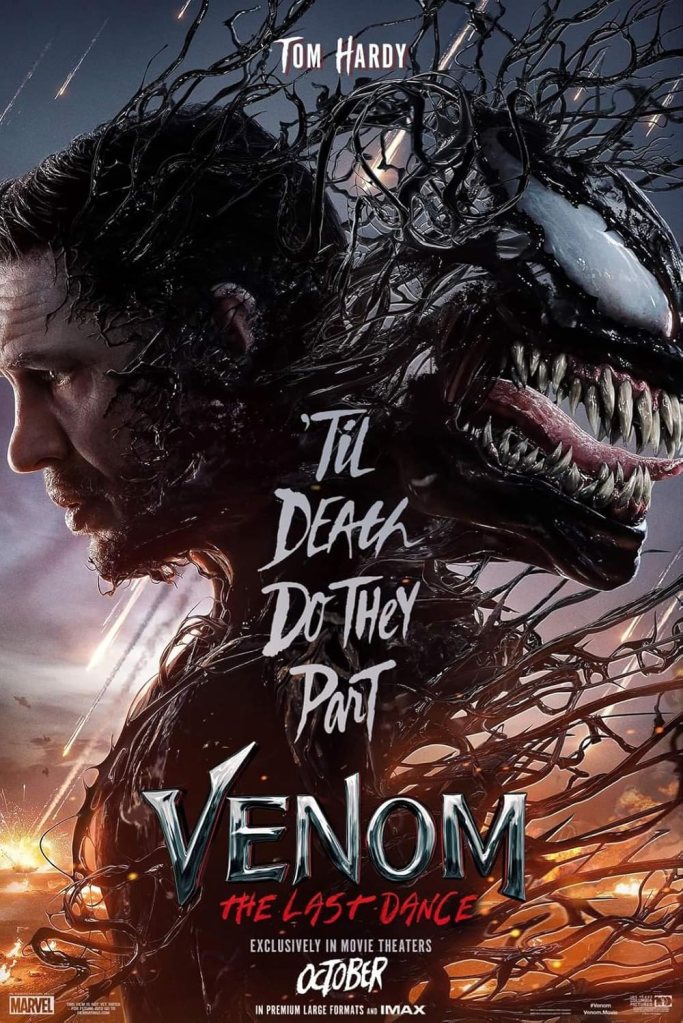
    Get ready for a wild ride because Venom: The Last Dance is here, and it’s an absolute blast from start to finish! If you’re looking for a movie that grabs you by the throat (in a friendly, symbiotic way, of course) and doesn’t let go until the credits roll, then look no further. This latest installment in the Venom saga cranks up the dial on the action, the laughs, and most importantly, the unique bond between the alien symbiote and its human host, Eddie Brock, played by the incomparable Tom Hardy.

    From the moment the film kicks off, you’re thrown headfirst into a whirlwind of chaos. Director Kelly Marcel (who also penned the screenplay) understands exactly what audiences love about this franchise: high-octane action sequences that are as creative as they are explosive. Cars are flipped, buildings crumble, and tentacles flail in a mesmerizing dance of destruction. Each action set piece feels bigger and bolder than the last, leaving you on the edge of your seat, breathlessly anticipating what mayhem Eddie and Venom will unleash next.

    But “Venom: The Last Dance” isn’t just about mindless explosions. What truly elevates this film is the heart at its core – the complex and often hilarious relationship between Eddie Brock, once again brilliantly portrayed by Tom Hardy, and his alien other half, Venom, also voiced by Tom Hardy. This isn’t just a parasitic relationship; it’s a genuine partnership, a bizarre yet touching bromance between two very different beings learning to coexist and rely on each other. Hardy masterfully portrays both the down-on-his-luck journalist and the gruff, alien voice within, creating a dynamic that is both entertaining and surprisingly poignant. You genuinely root for these two misfits, even as they’re causing widespread pandemonium. The film expertly balances the humor that stems from their odd-couple dynamic with moments of genuine emotional connection, reminding us that even the most unlikely pairings can forge unbreakable bonds.

    Adding to the dynamic cast are familiar faces and new intriguing characters. Chiwetel Ejiofor joins the fray as General Rex Strickland, a formidable military commander tracking Eddie and Venom, and Juno Temple shines as Dr. Teddy Paine, a scientist who plays a crucial role in understanding the symbiotes. Peggy Lu also returns as the ever-present Mrs. Chen, providing some welcome moments of comic relief. And speaking of Mrs. Chen, be prepared for a truly unforgettable moment – the dance with Mrs. Chen is absolutely a must-see! It’s a hilarious and surprisingly heartwarming highlight that perfectly encapsulates the quirky charm of this franchise.

    The role of the scientists in “Venom: The Last Dance” is particularly highlighted and is far from a mere plot device. Dr. Teddy Paine and her assistant Sadie (played by Clark Backo) are central to the government’s Imperium operation, which is dedicated to capturing and studying symbiotes that have fallen to Earth. Their research at Area 51 (or rather, Area 55, a facility hundred feet underground) is critical to understanding the symbiotes’ origins and purpose, and even the threat posed by the creator of all symbiotes, Knull (voiced by Andy Serkis). The film cleverly weaves in the scientific efforts to contain and comprehend these alien entities, creating a layer of intrigue and stakes beyond just the raw action. While General Strickland represents the military approach of capture and control, Dr. Paine often embodies a more nuanced, empathetic perspective towards the symbiotes, driven by a desire for knowledge and even a sense of understanding. Their experiments and discoveries are not only key to the plot’s progression but also raise ethical questions about scientific pursuit and the consequences of meddling with unknown extraterrestrial life.

    While the plot itself is a rollercoaster of twists and turns, it’s the sheer entertainment value that truly shines. “Venom: The Last Dance” knows exactly what kind of movie it is – a fun, action-packed spectacle that doesn’t take itself too seriously. It delivers on its promise of thrilling action sequences, laugh-out-loud moments, and a deeper exploration of the endearing relationship between Eddie and Venom.

    If you’re a fan of the previous Venom films, or simply looking for an exhilarating and thoroughly enjoyable cinematic experience, then “Venom: The Last Dance” is a must-see. It’s a testament to the enduring appeal of these characters and a fantastic reminder that sometimes, the most unexpected partnerships can lead to the most entertaining adventures. So grab your popcorn, settle into your seat, and get ready to cheer for the chaotic, explosive, and surprisingly heartwarming final dance of Venom and Eddie Brock. You won’t be disappointed!

  • “Thunderbolts*”: A Deep Dive into the Psyche of Marvel’s Anti-Heroes

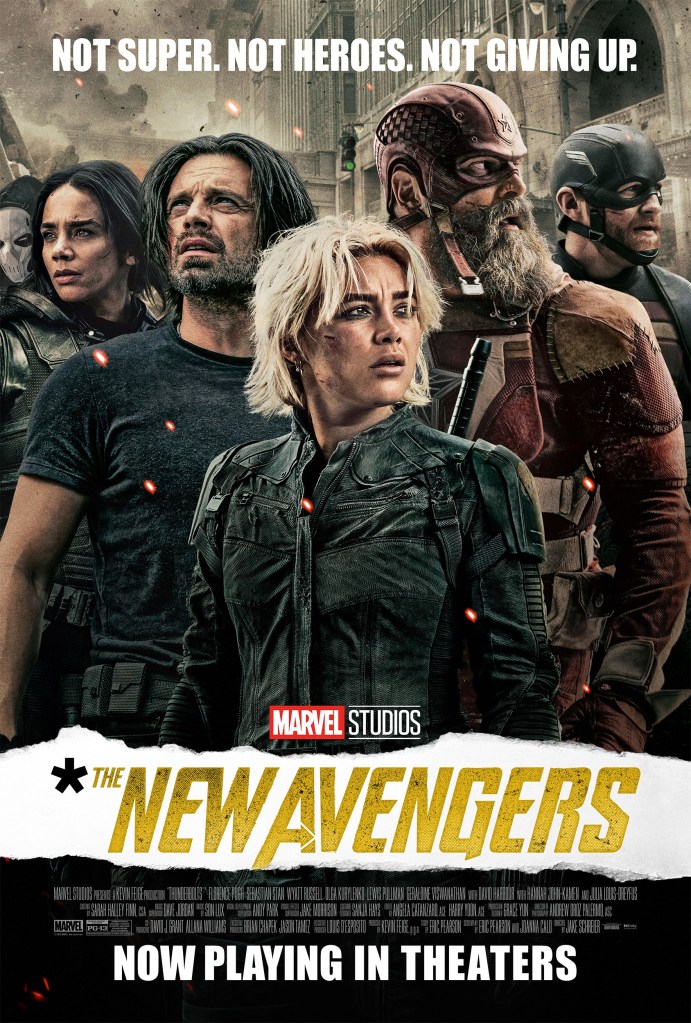
    In a refreshing departure from the multiverse-spanning sagas and often lighthearted banter of recent Marvel Cinematic Universe entries, “Thunderbolts”* emerges as a surprisingly grounded and emotionally resonant film. Directed by Jake Schreier, this ensemble piece brings together a collection of anti-heroes and morally ambiguous figures, forcing them to confront not just external threats, but the profound psychological scars and memories that define them. Critics have largely lauded the film for its bold dive into mental health, trauma, and the complex inner lives of its characters, signaling a potentially new direction for the MCU.

    The film’s premise sees Yelena Belova (Florence Pugh), Bucky Barnes (Sebastian Stan), Red Guardian (David Harbour), Ghost (Hannah John-Kamen), Taskmaster (Olga Kurylenko), and John Walker (Wyatt Russell) ensnared in a dangerous mission orchestrated by the manipulative CIA director Valentina Allegra de Fontaine (Julia Louis-Dreyfus). What initially appears to be a standard team-up quickly unravels into a fight for survival that compels each member to confront the “darkest corners of their pasts.”

    Unpacking the Psyche: Trauma, Loneliness, and Redemption

    “Thunderbolts*” distinguishes itself by making mental health and trauma central to its narrative. Reviewers consistently highlight how the film “plunge[s] so deeply into its characters’ mental health issues,” treating them with a “sincere and heartfelt” approach. This is not merely a plot device but a fundamental aspect of who these characters are and how they operate.

    • Yelena Belova (Florence Pugh): As the film’s emotional anchor, Yelena’s journey is deeply rooted in her past as a Black Widow assassin. She grapples with the grim memories of her indoctrination, including a particularly haunting flashback where she was forced to lead a friend to their death. Her coping mechanisms, like throwing herself into work and alcohol, are depicted as a desperate attempt to avoid her pain, leading to a “psychological dissociation” and a sense of “emptiness.” The film beautifully explores her search for connection and redemption, portraying her as a “broken figure” who yearns for purpose beyond her violent past.
    • Bob / The Sentry / The Void (Lewis Pullman): Perhaps the most psychologically complex character, Bob embodies the film’s exploration of mental illness. He is a former addict with immense power, but also carries a “deep inner pain” from an abusive childhood. His alter ego, The Void, is a literal manifestation of his “depression and insecurities,” capable of trapping people in “pocket dimensions based on their worst memories.” The film delves into Bob’s internal struggle, showing how his avoidance of traumatic memories leads to his destructive tendencies. The climax, where Yelena enters Bob’s consciousness to confront his past, is a surreal and impactful sequence that visually represents the battle against internalized trauma.
    • Red Guardian (David Harbour): Alexei struggles with feelings of inadequacy and being a “failed father” figure. His desire to restore former greatness and his complex relationship with Yelena add layers to his character, showing a man stuck in the past yet striving for connection.
    • John Walker (Wyatt Russell): The film delves into the fallout of Walker’s past actions, revealing how untreated trauma has led to his boastful demeanor and the dissolution of his family life.
    • Ghost (Hannah John-Kamen): Her struggles with her artificial origins and the fear of never being complete are also touched upon, adding to the ensemble’s collective sense of brokenness.

    The film uses Bob’s unique ability to access others’ darkest memories as a narrative device, forcing characters to relive their past regrets and traumas. This not only provides audiences with a deeper understanding of their motivations but also highlights how “past traumas can be detrimental long after they’re over.”

    A Shift in the MCU’s Emotional Landscape

    “Thunderbolts*” is praised for its willingness to embrace “dark human emotions” and explore themes of loneliness, grief, and the importance of companionship. It’s a film that suggests “human connection really was powerful enough to save the world,” emphasizing that even the strongest individuals “sometimes need help.” This focus on the “human elements” over excessive CGI spectacle marks a welcome shift for many critics, who see it as a return to the character-driven storytelling that defined earlier phases of the MCU.

    While the film is not without its minor flaws – some critics note an “unwieldy jumble” in its initial act, a “drab” visual palette, and some “formulaic” plot points – its commitment to exploring the psychological dimensions of its anti-heroes makes it a “refreshing misfit hit.” “Thunderbolts*” is lauded as “one of the best MCU movies in a long time,” offering a “genuinely emotional story” that resonates with audiences and provides a compelling look at what happens when flawed individuals are forced to confront their inner demons and find strength in unity.