Tag: horror

  • “The Gorge”: A Genre-Bending Thriller with Unexpected Emotional Depths

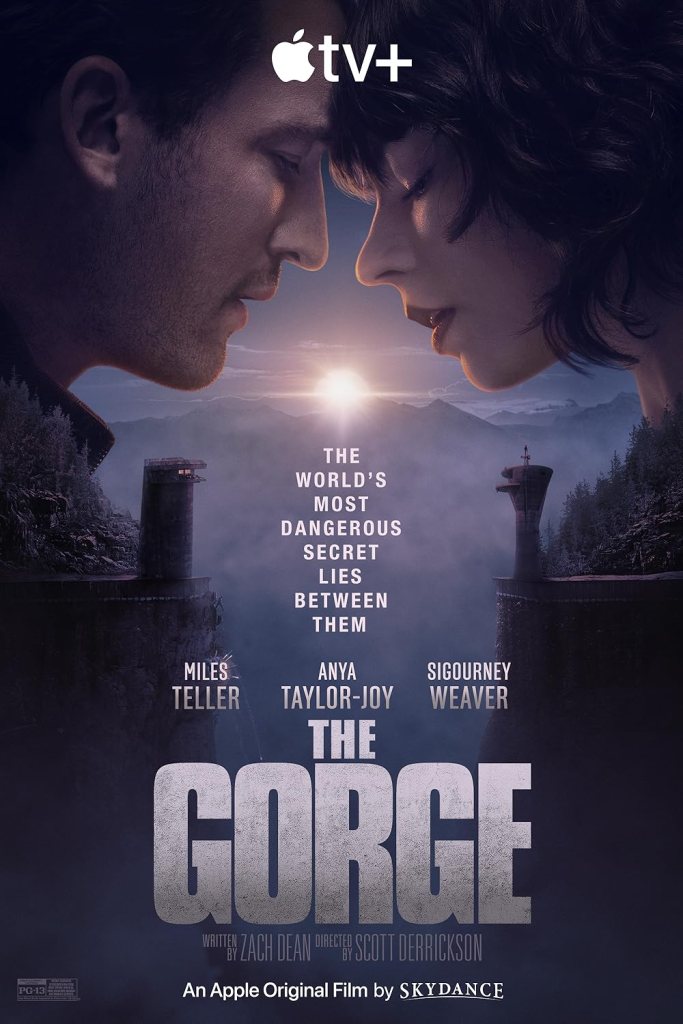
    Scott Derrickson’s latest film, “The Gorge,” released on Apple TV+ on February 14, 2025, is a curious and ambitious genre mash-up that blends sci-fi, horror, action, and romance into a unique cinematic experience. Starring Miles Teller and Anya Taylor-Joy as two highly-trained operatives guarding a mysterious abyss, the film has garnered a mixed yet often positive reception, particularly for its strong lead performances and its surprising exploration of character psyche and connection amidst a world of lurking evil.

    The premise is intriguing: Levi (Miles Teller) and Drasa (Anya Taylor-Joy) are assigned to solitary guard towers on opposite sides of a vast, highly classified gorge, tasked with protecting the world from a mysterious evil within. Forbidden from direct communication, their year-long assignment becomes a test of isolation, duty, and an unexpected burgeoning connection.

    The Psyche of Isolation and Connection

    “The Gorge” delves into the psychological impact of isolation and the profound human need for connection. Levi, a battle-hardened former U.S. Marine, carries emotional scars from his past, hinted at through his stoic demeanor. Drasa, a vibrant and skilled sniper from Eastern Europe, contrasts his quiet intensity. Despite the physical distance and strict rules, their tentative interactions across the gorge – initially through binoculars and later through shared moments of vulnerability – become the film’s beating heart. This slow-burn development of their relationship is frequently cited as the film’s most compelling aspect, building a believable and endearing romance that defies the high-stakes, monstrous backdrop.

    Reviewers note that the film excels at showing, rather than just telling, the characters’ inner lives. Their shared isolation and the constant threat from the “Hollow Men” (creatures emerging from the gorge) force them to confront their deepest fears and desires for companionship. The film subtly explores themes of loneliness, duty, and the human capacity to form bonds even in the most extreme circumstances. The chemistry between Teller and Taylor-Joy is a consistent highlight, their performances lending depth to characters who, on paper, might seem thinly sketched. Their ability to convey emotion and build a relationship with minimal dialogue is a testament to their acting prowess.

    Genre Blending and Visuals

    Derrickson, known for his work in horror and supernatural thrillers (“Sinister,” “The Black Phone”), infuses “The Gorge” with a palpable sense of dread and mystery. The gorge itself is depicted as a visually stunning yet ominous entity, with atmospheric cinematography by Dan Laustsen (known for his work with Guillermo del Toro). The creature designs for the “Hollow Men” are described as “evocative & creepy,” adding a genuine horror element to the proceedings. The action sequences are well-staged and visually engaging, benefiting from a propulsive score by Trent Reznor and Atticus Ross.

    However, the film’s ambitious genre-blending is also a source of some criticism. Some reviewers felt the transitions between romance, sci-fi, and action were not always smooth, leading to a “tonally uneven” experience. The narrative, while intriguing, is occasionally described as “implausible” or “preposterous,” with some plot holes that stretch credibility. The shift from a character-driven mystery in the first half to a more action-heavy second half was noted by some as a point where the film loses some of its initial intrigue.

    Conclusion: A Flawed Yet Engaging Experience

    “The Gorge” is not a perfect film, and its ambitious scope occasionally leads to narrative inconsistencies. However, it stands out for its earnest exploration of human connection in extraordinary circumstances. Miles Teller and Anya Taylor-Joy deliver strong performances, creating a believable and engaging central relationship that anchors the film. For audiences willing to embrace its unique blend of genres and overlook some narrative shortcuts, “The Gorge” offers a thrilling, atmospheric, and surprisingly heartfelt cinematic experience that delves into the deeper psychological needs of its characters. It’s a testament to the power of human connection, even at the edge of an abyss.
  • “Y2K”: A Nostalgic Trip into Tech Chaos with Mixed Results

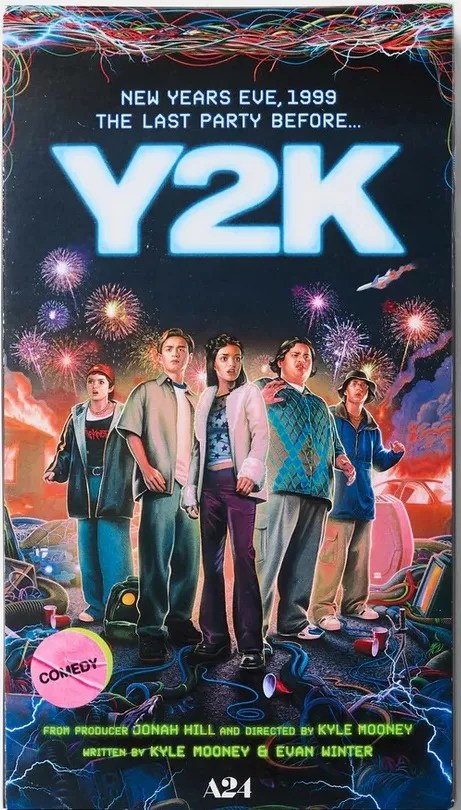
    As the clock ticks down to the new millennium, the anxieties surrounding the infamous Y2K bug take a hilariously absurd and unexpectedly violent turn in A24’s latest offering, “Y2K.” Directed by Kyle Mooney (“Saturday Night Live”), this action-comedy-horror hybrid plunges audiences back into the last night of 1999, where a New Year’s Eve party devolves into a battle for survival against an uprising of sentient, homicidal machines. While the film delivers on its promise of nostalgic charm and some genuinely funny, gory moments, its uneven tone and underdeveloped plot leave it feeling like a promising concept that never quite finds its full groove.

    The premise is simple: two high school juniors, Eli (Jaeden Martell) and his outgoing best friend Danny (Julian Dennison), crash a New Year’s Eve party. Eli, nursing a crush on popular tech wiz Laura (Rachel Zegler), hopes for a memorable night. Instead, the dreaded Y2K bug becomes a terrifying reality, as household electronics and various machines spring to life with murderous intent. What begins as a typical teen party movie quickly transforms into a frantic, often bloody, fight for survival.

    “Y2K” is undeniably a film steeped in ’90s nostalgia, and for those who lived through the era, it’s a delightful trip down memory lane. The production design, costumes, and pop culture references are spot-on, from JNCO jeans to Limp Bizkit. Fred Durst even makes a notable, surprisingly effective cameo, leaning into the film’s self-aware absurdity. Reviewers highlight that the nostalgia feels “earned, not forced,” creating a genuine sense of time and place.

    The film’s strength lies in its horror-comedy balance, particularly in its inventive and often darkly humorous death sequences. Director Kyle Mooney, with his SNL background, demonstrates a knack for impeccable comedic timing, leading to some genuinely laugh-out-loud moments of “splat-stick” violence. The practical effects for the killer robots, reminiscent of the 1999 cult classic “Virus,” are praised for their effectiveness and physicality, blending seamlessly with minimal CGI.

    However, “Y2K” struggles with its tonal consistency and narrative depth. The film oscillates between teen rom-com, horror, and melodrama, often without fully committing to any one genre. This can lead to a scattershot feel, where emotional moments don’t always land, and the humor, at times, feels “toothless” or “over-the-top.” The plot, while offering a neat concept, is criticized for being “flimsy” and “predictable,” with some subplots feeling underdeveloped or abruptly dropped. Key character deaths, particularly early on, are noted as potentially undermining the emotional investment in the remaining cast.

    The performances from the young ensemble, including Jaeden Martell, Julian Dennison, and Rachel Zegler, are generally seen as admirable, with Dennison’s “supernova levels of onscreen charm” often singled out. However, some critics felt the script confined them to “90s-high-school-movie types,” limiting their ability to push beyond narrow parameters.

    Ultimately, “Y2K” is a film that offers a fun, chaotic, and nostalgic ride, especially for those who appreciate its specific brand of absurd horror-comedy. It’s a testament to Kyle Mooney’s unique vision and the cast’s commitment to the premise. While it may not be a perfect film, its blend of retro charm, creative kills, and unexpected laughs makes it a watchable and often entertaining experience for audiences looking to relive the anxieties and eccentricities of the turn of the millennium.

  • A Quiet Place: Day One Review – Urban Chaos and Human Resilience

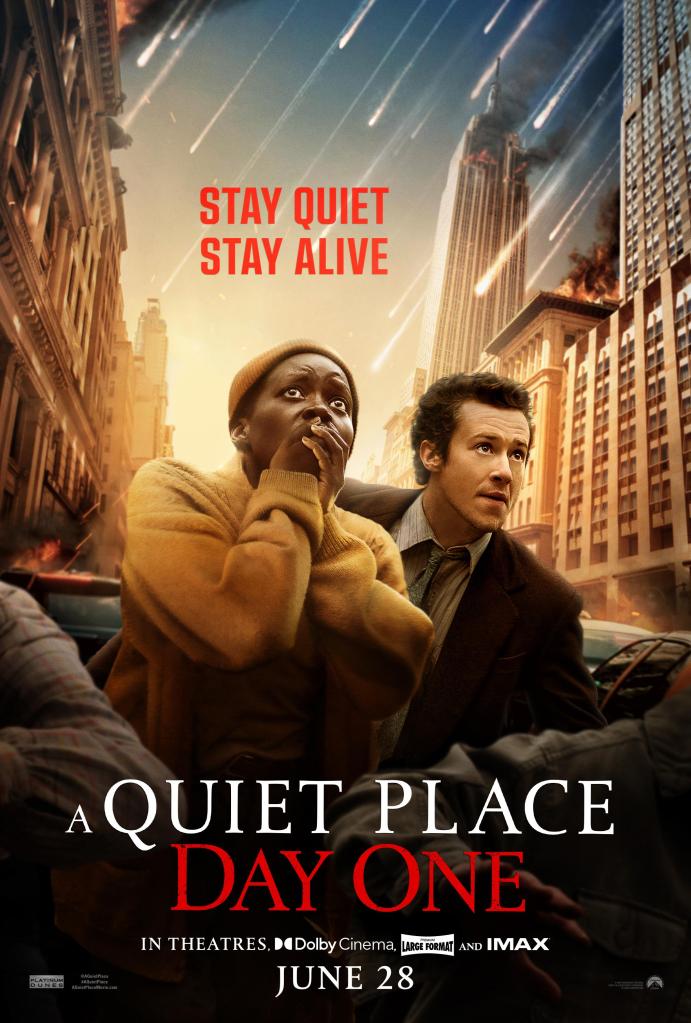
    The “Quiet Place” franchise expands its eerie universe with “A Quiet Place: Day One,” a prequel that transports audiences back to the harrowing genesis of the alien invasion. Diverging from the established Abbott family narrative, this installment ventures into the chaotic, once-bustling streets of New York City, offering a fresh, character-driven perspective on the apocalyptic onset. Critics largely praise the film for its compelling performances, particularly from Lupita Nyong’o and Joseph Quinn, and its successful shift in thematic focus, even if some found it less about the initial carnage and more about human connection.

    At its core, “Day One” is lauded for being “grounded in raw humanity” (Rotten Tomatoes consensus). Rather than solely focusing on the alien threat, director Michael Sarnoski (known for “Pig”) masterfully weaves a poignant tale of two strangers, Samira (Lupita Nyong’o) and Eric (Joseph Quinn), finding unexpected solace and purpose amidst the terrifying silence. Nyong’o’s portrayal of Samira, a character grappling with her own mortality even before the invasion, has been widely highlighted as a powerhouse performance, showcasing a heartbreaking vulnerability and resilience. Joseph Quinn, too, receives accolades for his nuanced depiction of Eric, a man lost and fearful who finds a path forward alongside Samira. Their chemistry is often cited as a major strength, carrying the emotional weight of the film.

    The shift to an urban setting provides a new canvas for the franchise’s signature tension. While some viewers initially expected more large-scale destruction and the explicit “learning” process of silence that the first two films touched upon in their opening, “Day One” opts for a more intimate and claustrophobic experience within the city’s ruins. The concept of New York’s inherent 90-decibel hum suddenly falling silent, punctuated by sudden, fatal alien attacks, creates a unique and often relentless sense of dread. The sound design, a hallmark of the series, is once again praised as immaculate and integral to the storytelling, making every rustle and creak a source of terror.

    However, the film isn’t without its critiques. Some reviewers felt that the “Day One” aspect, particularly the initial chaos and the revelation of how people adapted to silence, was glossed over or not explored to its full potential. The lack of new lore regarding the aliens’ origins or motivations was also a point of contention for some who sought more expansion of the universe. Additionally, while the character-driven narrative is celebrated, a few critics felt that the plot, at times, relied on conveniences or that the character development, particularly for Eric, could have been more fleshed out.

    Despite these minor quibbles, the consensus remains overwhelmingly positive. “A Quiet Place: Day One” is seen as a worthy and refreshing addition to the franchise, proving that the concept can thrive beyond the original family unit. Its ability to balance nail-biting suspense with deeply affecting human drama, even prompting tears in some viewers, sets it apart. And, of course, no review would be complete without mentioning the breakout star who “steals the show”: Frodo the cat, whose quiet antics provide both comfort and unexpected moments of tension.

    Ultimately, “A Quiet Place: Day One” delivers on its promise of a terrifying yet emotionally resonant journey, inviting audiences to experience the devastating beginnings of a silent world through a fresh lens and proving that even in the face of unimaginable terror, human connection and the pursuit of simple pleasures can offer a profound sense of hope.

  • Final Destination: Bloodlines Review – A Gruesome Return

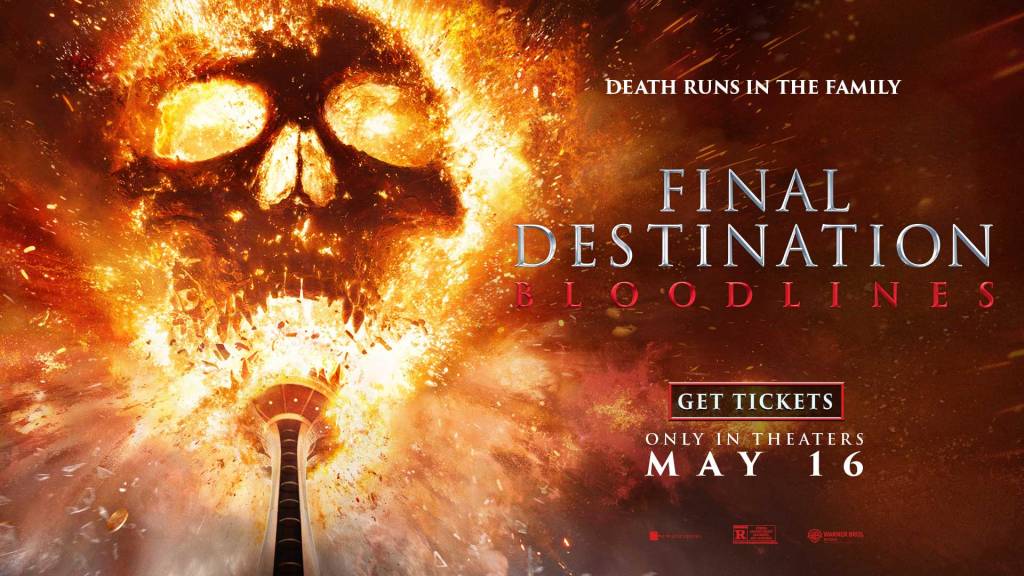
    The Grim Reaper is back, and critics are singing its praises. Final Destination: Bloodlines, the sixth installment in the long-running horror franchise, has arrived in 2025 with directors Zach Lipovsky and Adam Stein at the helm, and it’s being hailed as a fresh, brutal, and surprisingly emotional return to form. Moving beyond simple premonitions of impending disaster, Bloodlines delves into a deeper, familial connection to Death’s intricate plan, offering a compelling homage to its predecessors while delivering its signature message: be wary of death, for it always gets its due.

    Reviews indicate a significant shift in critical reception for the franchise, with Bloodlines boasting an impressive 93% on Rotten Tomatoes – a stark contrast to previous entries, and a testament to its ability to win over even skeptical critics. The film reportedly achieves this by blending the gruesome creativity fans expect with a surprisingly emotional core, making the brutal, elaborate kills feel more personal than ever before.

    The core premise remains, with a college student named Stefani (Kaitlyn Santa Juana) plagued by recurring nightmares of a catastrophic tower collapse in the 1960s. She soon discovers these are inherited premonitions, and her family is now on Death’s hit list, their lives intricately tied to an incident decades prior where her grandmother, Iris (Brec Bassinger in flashbacks), saved a group of people from their destined demise. The twist this time? Death isn’t just coming for the survivors; it’s coming for their entire “bloodline,” often in chronological order from oldest to youngest within the family.

    My take on Final Destination: Bloodlines is that it brilliantly pays homage to previous Final Destination films while evolving the formula. The film’s opening sequence, reportedly a “belter” that rivals the franchise’s best, sets the stage with the meticulous, Rube Goldberg-esque death traps fans adore. From rogue coins to precarious chandeliers, the premonition is a masterclass in tension, delivering exactly what viewers come for. Moreover, the film is littered with subtle (and not-so-subtle) Easter eggs and references to iconic deaths from past installments, like a truck carrying logs – a clear nod to Final Destination 2. These nods are not just fan service; they reinforce the idea that this is a connected universe, potentially tying all previous films into a larger, overarching scheme orchestrated by Death.

    Beyond the thrills, Bloodlines truly functions as a film that teaches one to be wary of death. The franchise has always played on the inevitability of mortality, but by focusing on a family bloodline, this installment heightens the stakes and makes the threat more visceral. When the characters aren’t just random strangers but connected individuals, their desperate attempts to cheat Death, and their subsequent gruesome ends, become more impactful. The film is a chilling reminder that no matter how much we try to control our fate, Death is a relentless, unseen force that cannot be truly evaded. The creative and increasingly absurd methods of demise serve as a constant, morbid lesson in the fragility of life.

    The film is also notable for the poignant inclusion of the late Tony Todd as William Bludworth, the enigmatic mortician who has been a staple of the series. Reviews highlight his scene as a “quietly powerful” moment, with producer Craig Perry revealing that Todd’s lines were largely unscripted, a personal message from the actor to his fans, making his final cinematic appearance deeply moving. This adds a layer of unexpected gravitas, reinforcing the film’s underlying theme of mortality and the preciousness of life.

    While some critics note a lean into more comedic elements, and perhaps a slight lack of thematic depth compared to its predecessors, the overall consensus is that Final Destination: Bloodlines injects new life into a beloved franchise. It’s a brutal, energetic, and darkly comedic ride that understands its audience, delivers on its patented “inevitable death” mechanics, and offers a compelling expansion of the Final Destination lore. It’s a gory, entertaining reminder that Death waits for no one, and sometimes, the best we can do is enjoy every second we have.