Category: Movie Reviews

At Ilavueso, our Movie Reviews section is more than just a summary of plots. We delve deep into the heart of filmmaking, offering you a comprehensive and engaging analysis of the films that capture our attention. We believe that a truly great movie review goes beyond a simple “good” or “bad” verdict, inviting you to explore the nuances of storytelling, artistry, and cultural impact.

  • A Heartfelt Return to Paradise: Lilo & Stitch Live-Action Review

    Stepping into the world of the live-action Lilo & Stitch felt less like watching a new movie and more like a warm, comforting hug from my past. From the moment the familiar strains of Hawaiian music began, a wave of pure nostalgia washed over me, transporting me straight back to the carefree days of my childhood, curled up in front of the TV, utterly captivated by the original animated classic.

    This adaptation truly understands the magic that made the 2002 film so beloved. It’s wonderful to see how faithfully it captures the spirit of Lilo and Stitch’s unique bond, the quirky charm of their Hawaiian home, and the profound message of ‘ohana. The casting feels spot-on, with the young actors embodying the innocence of Lilo and the mischievous yet endearing nature of Stitch with remarkable authenticity. Seeing these characters, who were such a significant part of my formative years, brought to life in a new way is incredibly moving.

    The film beautifully balances the playful antics of Experiment 626 with the genuine emotional depth of Lilo’s journey to find belonging. Every scene felt like reminiscing, from Stitch’s chaotic introduction to the tender moments of their growing friendship. The visual effects for Stitch are impressive, making him feel like a tangible, adorable, and sometimes destructive, part of the family.

    A significant part of the film’s charm comes from its cast. Newcomer Maia Kealoha shines as Lilo Pelekai, capturing the spirited and imaginative nature of the young Hawaiian girl. Sydney Agudong takes on the role of Nani Pelekai, Lilo’s older sister and guardian, bringing a sense of strength and palpable emotion to the character. Reprising his iconic role, Chris Sanders returns to voice Stitch, ensuring that the mischievous yet lovable alien retains his familiar charm. The ensemble is further bolstered by familiar faces such as Zach Galifianakis as the eccentric Dr. Jumba Jookiba, Billy Magnussen as the quirky Agent Pleakley, and Courtney B. Vance as the stoic Cobra Bubbles. Original cast members like Tia Carrere (who voiced Nani in the animated film) and Amy Hill also make appearances in new roles, adding another layer of nostalgic delight for long-time fans.

    For anyone who grew up with Lilo, Stitch, Nani, and Jumba, this live-action rendition is more than just a movie; it’s an experience that taps directly into the wellspring of childhood memories. It reminds you of the simple joys, the importance of family (both blood and chosen), and the idea that even the most unusual creatures can find a place to call home. It’s a truly wonderful and heartwarming tribute that left me with a lump in my throat and a smile on my face, feeling like a kid again.

    The internet’s verdict on the Lilo & Stitch live-action movie has been somewhat mixed, yet generally leans towards a positive reception, especially when compared to some of Disney’s other recent live-action remakes. Many critics and viewers praise its ability to capture the heart and themes of the original, particularly the emphasis on ‘ohana and the emotional bond between Lilo and Nani. The film is often lauded for its faithfulness to the source material and for striking a balance between nostalgia and fresh elements. However, some criticisms have emerged, with a notable point being that Stitch’s role and emotional arc might feel somewhat sidelined in favor of focusing more on the human family drama. While some find the visual effects for Stitch impressive, others feel that certain comedic aspects or the overall “anarchy” of the original might be toned down. Despite these points of contention, the general consensus suggests that Lilo & Stitch is a pleasant, heartfelt, and largely successful adaptation that resonates with audiences, particularly those who cherish the animated classic.
  • “The Gorge”: A Genre-Bending Thriller with Unexpected Emotional Depths

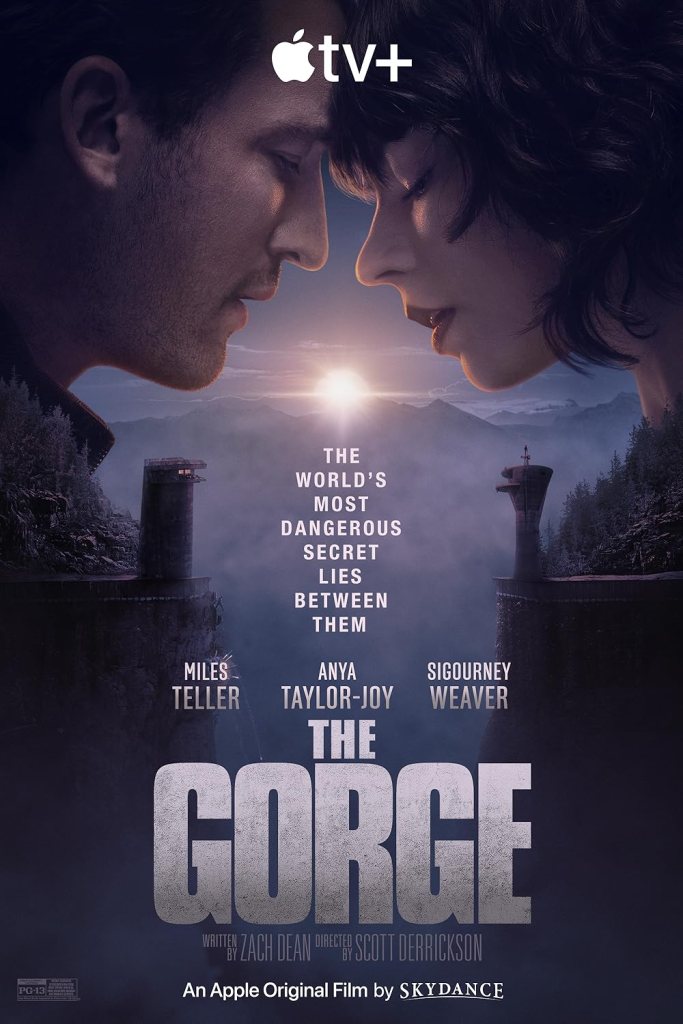
    Scott Derrickson’s latest film, “The Gorge,” released on Apple TV+ on February 14, 2025, is a curious and ambitious genre mash-up that blends sci-fi, horror, action, and romance into a unique cinematic experience. Starring Miles Teller and Anya Taylor-Joy as two highly-trained operatives guarding a mysterious abyss, the film has garnered a mixed yet often positive reception, particularly for its strong lead performances and its surprising exploration of character psyche and connection amidst a world of lurking evil.

    The premise is intriguing: Levi (Miles Teller) and Drasa (Anya Taylor-Joy) are assigned to solitary guard towers on opposite sides of a vast, highly classified gorge, tasked with protecting the world from a mysterious evil within. Forbidden from direct communication, their year-long assignment becomes a test of isolation, duty, and an unexpected burgeoning connection.

    The Psyche of Isolation and Connection

    “The Gorge” delves into the psychological impact of isolation and the profound human need for connection. Levi, a battle-hardened former U.S. Marine, carries emotional scars from his past, hinted at through his stoic demeanor. Drasa, a vibrant and skilled sniper from Eastern Europe, contrasts his quiet intensity. Despite the physical distance and strict rules, their tentative interactions across the gorge – initially through binoculars and later through shared moments of vulnerability – become the film’s beating heart. This slow-burn development of their relationship is frequently cited as the film’s most compelling aspect, building a believable and endearing romance that defies the high-stakes, monstrous backdrop.

    Reviewers note that the film excels at showing, rather than just telling, the characters’ inner lives. Their shared isolation and the constant threat from the “Hollow Men” (creatures emerging from the gorge) force them to confront their deepest fears and desires for companionship. The film subtly explores themes of loneliness, duty, and the human capacity to form bonds even in the most extreme circumstances. The chemistry between Teller and Taylor-Joy is a consistent highlight, their performances lending depth to characters who, on paper, might seem thinly sketched. Their ability to convey emotion and build a relationship with minimal dialogue is a testament to their acting prowess.

    Genre Blending and Visuals

    Derrickson, known for his work in horror and supernatural thrillers (“Sinister,” “The Black Phone”), infuses “The Gorge” with a palpable sense of dread and mystery. The gorge itself is depicted as a visually stunning yet ominous entity, with atmospheric cinematography by Dan Laustsen (known for his work with Guillermo del Toro). The creature designs for the “Hollow Men” are described as “evocative & creepy,” adding a genuine horror element to the proceedings. The action sequences are well-staged and visually engaging, benefiting from a propulsive score by Trent Reznor and Atticus Ross.

    However, the film’s ambitious genre-blending is also a source of some criticism. Some reviewers felt the transitions between romance, sci-fi, and action were not always smooth, leading to a “tonally uneven” experience. The narrative, while intriguing, is occasionally described as “implausible” or “preposterous,” with some plot holes that stretch credibility. The shift from a character-driven mystery in the first half to a more action-heavy second half was noted by some as a point where the film loses some of its initial intrigue.

    Conclusion: A Flawed Yet Engaging Experience

    “The Gorge” is not a perfect film, and its ambitious scope occasionally leads to narrative inconsistencies. However, it stands out for its earnest exploration of human connection in extraordinary circumstances. Miles Teller and Anya Taylor-Joy deliver strong performances, creating a believable and engaging central relationship that anchors the film. For audiences willing to embrace its unique blend of genres and overlook some narrative shortcuts, “The Gorge” offers a thrilling, atmospheric, and surprisingly heartfelt cinematic experience that delves into the deeper psychological needs of its characters. It’s a testament to the power of human connection, even at the edge of an abyss.

  • The White Lotus Season 2: A Sicilian Escape into Sex, Power, and Desire

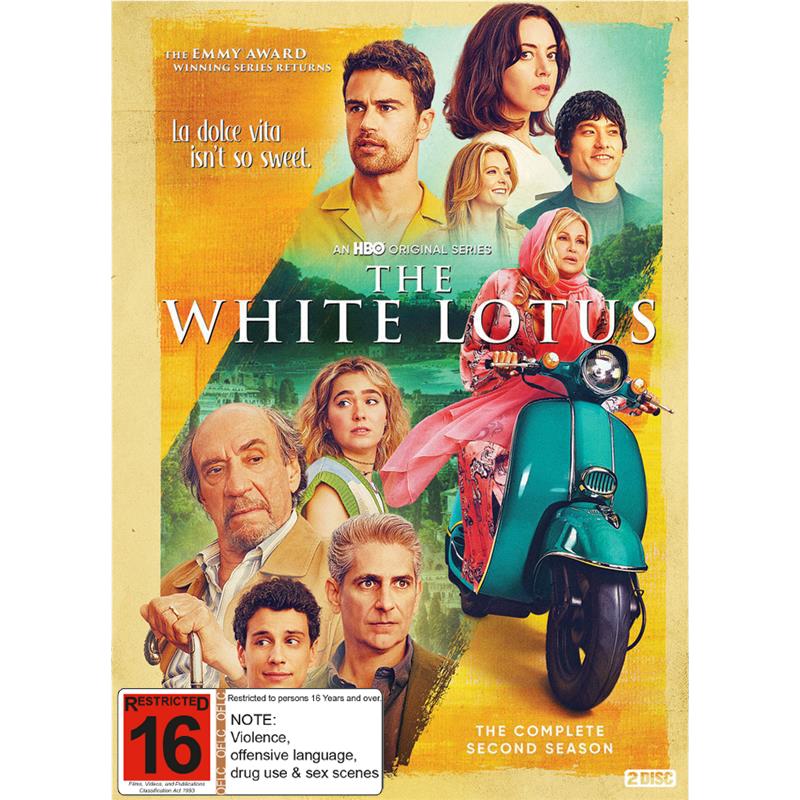
    Following the immense success of its debut season, “The White Lotus” returned in 2022, transporting its unique brand of satirical drama from the Hawaiian shores to the sun-drenched, ancient landscapes of Sicily, Italy. Creator Mike White once again delivers a compelling and often uncomfortable exploration of wealth, privilege, and the intricate, often messy, dynamics of human relationships, this time with a heightened focus on themes of sex, desire, and infidelity.

    Premise: Season 2 shifts its gaze to a new group of affluent travelers and the local staff at another luxurious White Lotus resort, this time nestled on the picturesque coast of Sicily. As with the first season, the narrative begins with the ominous discovery of multiple bodies, setting a suspenseful tone as viewers are left to unravel the complex web of interactions that lead to the tragic outcome. The week-long stay becomes a crucible for various intertwined relationships, exposing vulnerabilities, desires, and the often-destructive pursuit of pleasure.

    Key Themes: While retaining the sharp social commentary of its predecessor, Season 2 delves deeper into specific thematic territories:

    • Sex and Desire: This season explicitly explores the multifaceted nature of desire, infidelity, and sexual power dynamics. From casual encounters to long-standing marital tensions, the characters grapple with their own and others’ sexual identities and urges.
    • Gender Roles and Power: The series examines traditional and modern gender roles, particularly within relationships, and how power is wielded, challenged, and exploited between men and women.
    • Italian Culture vs. American Privilege: The clash between the ancient, passionate, and often patriarchal traditions of Sicilian culture and the more individualistic, often naive, American tourists provides a rich layer of commentary.
    • Infidelity and Betrayal: Many storylines revolve around trust, suspicion, and the devastating impact of betrayal within romantic and familial bonds.
    • The Pursuit of Happiness/Meaning: Despite their wealth, many characters are deeply unhappy, seeking fulfillment through external validation, fleeting pleasures, or attempts to escape their inner turmoil.

    Characters: The ensemble cast is once again stellar, bringing to life a new set of memorable and flawed individuals:

    • Tanya McQuoid (Jennifer Coolidge): The sole returning character, Tanya’s journey continues as she navigates her marriage to Greg and seeks new experiences, often with chaotic and hilarious results. Coolidge once again shines, earning another Emmy for her iconic portrayal.
    • Harper Spiller (Aubrey Plaza) and Ethan Spiller (Will Sharpe): A newly wealthy tech couple who find themselves increasingly uncomfortable and suspicious of their seemingly perfect friends, Cameron and Daphne. Harper’s cynical observations and Ethan’s quiet anxiety are central to the season’s tension.
    • Cameron Sullivan (Theo James) and Daphne Sullivan (Meghann Fahy): A seemingly idyllic, carefree couple whose relationship is built on unspoken agreements and a dangerous level of complacency. Their dynamic challenges conventional notions of fidelity and happiness.
    • Lucia (Simona Tabasco) and Mia (Beatrice Grannò): Two local Sicilian women who navigate the world of wealthy tourists, offering services and seeking opportunities, often blurring the lines between ambition and exploitation. Their vibrant energy and street smarts provide a fascinating counterpoint to the guests.
    • Dominic Di Grasso (Michael Imperioli), Bert Di Grasso (F. Murray Abraham), and Albie Di Grasso (Adam DiMarco): Three generations of Italian-American men on a heritage trip, each grappling with their own issues of masculinity, desire, and family legacy.

    Performances: The acting is uniformly excellent. Jennifer Coolidge continues to be a standout, delivering both comedic gold and poignant vulnerability. Aubrey Plaza and Will Sharpe expertly convey their characters’ escalating paranoia and marital discord. Meghann Fahy’s Daphne is a revelation, embodying a complex blend of naiveté and shrewdness. The performances of Simona Tabasco and Beatrice Grannò as Lucia and Mia are captivating, bringing a raw, authentic energy to the series.

    Directing and Writing: Mike White’s singular vision remains the driving force. His writing is as sharp and observant as ever, crafting dialogue that is both witty and deeply unsettling. The pacing is deliberate, allowing the psychological tension to build slowly, culminating in a dramatic and fitting climax. The Sicilian setting is breathtakingly captured, with stunning cinematography that highlights both the beauty and the ancient weight of the island. The musical score, with its distinctive Italian flair, perfectly complements the luxurious yet unsettling atmosphere.

    Strengths:

    • Intriguing Mystery: The “who dies?” hook is effective, keeping viewers guessing and invested in the characters’ fates.
    • Complex Character Studies: Each character is meticulously developed, revealing layers of desire, insecurity, and hypocrisy.
    • Provocative Themes: The show fearlessly tackles sensitive topics like sex, power, and cultural clashes, sparking important conversations.
    • Stunning Visuals: The Sicilian backdrop is beautifully filmed, adding to the allure and luxury of the resort.
    • Exceptional Ensemble Cast: The performances are consistently strong, elevating the already compelling script.

    Overall Verdict: “The White Lotus” Season 2 is a triumphant return for the critically acclaimed series. While it maintains the sharp social commentary and dark humor of its predecessor, it carves out its own distinct identity by focusing on the intricate dance of sex, desire, and power. It’s a visually stunning, intellectually stimulating, and emotionally resonant journey that will leave you pondering the complexities of human nature long after the credits roll. Highly recommended for fans of the first season and anyone looking for intelligent, character-driven drama with a captivating mystery.

  • The White Lotus Season 1: A Deep Dive into Paradise and Privilege

    “The White Lotus” burst onto the scene in 2021 as a sharp, satirical, and often uncomfortable examination of wealth, privilege, and the complex dynamics that unfold when a group of affluent guests descends upon an exclusive Hawaiian resort. Created, written, and directed by Mike White, the first season masterfully blends dark comedy with biting social commentary, leaving viewers both entertained and profoundly reflective.

    Premise: The series follows various guests and staff members over a week at the luxurious White Lotus resort in Hawaii. From the outset, we know someone ends up dead, but the journey to uncover who and why is a fascinating exploration of human nature, societal structures, and the often-ugly truths hidden beneath a veneer of paradise.

    Key Themes: Season 1 is rich with thematic depth. It primarily dissects:

    • Privilege and Class: The stark contrast between the entitled guests and the subservient staff is a central focus. The show brilliantly exposes how wealth can blind individuals to their own impact and the struggles of others.
    • Colonialism and Exploitation: The Hawaiian setting is not merely a backdrop; it’s an active participant in the narrative. The series subtly, and sometimes not so subtly, critiques the historical and ongoing exploitation of indigenous lands and cultures by Western tourism.
    • Dysfunctional Relationships: From the newlywed couple grappling with power imbalances to the seemingly perfect family unit harboring deep-seated resentments, the show meticulously peels back the layers of various relationships, revealing their fragility and toxicity.
    • Existential Dread and Identity: Many characters are on a quest for meaning or struggling with their identity, often finding that even in paradise, their inner turmoil persists.
    • Hypocrisy and Self-Deception: The characters often present a curated version of themselves, but their actions and internal monologues expose their profound hypocrisy and self-deception.

    Characters: The ensemble cast is phenomenal, each character a meticulously crafted archetype, yet with enough nuance to feel real. Standouts include:

    • Tanya McQuoid (Jennifer Coolidge): A wealthy, emotionally vulnerable woman seeking solace and spiritual healing after her mother’s death. Coolidge delivers a career-defining performance, oscillating between heartbreaking fragility and comedic absurdity.
    • Shane Patton (Jake Lacy): The quintessential entitled rich kid on his honeymoon, whose incessant complaints and inability to empathize drive much of the season’s conflict.
    • Armond (Murray Bartlett): The resort manager, whose increasingly erratic behavior under pressure serves as a tragic mirror to the guests’ demands. His performance is a masterclass in controlled chaos.
    • Olivia and Paula (Sydney Sweeney and Brittany O’Grady): Two college friends whose intellectual superiority masks their own forms of privilege and manipulation. Their dynamic provides sharp commentary on performative wokeness.

    Performances: The acting across the board is exceptional. Jennifer Coolidge rightly earned an Emmy for her portrayal, bringing both humor and pathos to Tanya. Murray Bartlett’s descent into madness as Armond is captivating and heartbreaking. The younger cast members, particularly Sydney Sweeney and Brittany O’Grady, deliver nuanced performances that capture the complexities of their characters.

    Directing and Writing: Mike White’s genius lies in his ability to craft dialogue that is simultaneously witty, uncomfortable, and deeply revealing. His direction is precise, using lingering shots and subtle cues to build tension and expose character. The pacing is deliberate, allowing the slow burn of psychological drama to unfold organically. The Hawaiian setting is beautifully shot, creating a stark contrast between the idyllic visuals and the unsettling human drama.

    Strengths:

    • Sharp Satire: The show’s critique of wealth and privilege is incisive and thought-provoking without being preachy.
    • Compelling Characters: Even the most unlikable characters are fascinating to watch, thanks to brilliant writing and performances.
    • Tense Atmosphere: The underlying tension and mystery keep viewers engaged, even as the narrative explores uncomfortable truths.
    • Beautiful Cinematography: The stunning Hawaiian backdrop provides a visually rich experience.
    • Memorable Soundtrack: The score perfectly complements the show’s blend of tropical allure and underlying unease.

    Overall Verdict: “The White Lotus” Season 1 is a masterful piece of television that successfully blends dark humor, social satire, and character study. It’s a show that will make you laugh, squirm, and ultimately reflect on the uncomfortable realities of class, power, and human behavior. It’s not always an easy watch, but it’s an incredibly rewarding one, cementing its place as one of the standout series of recent years. Highly recommended for those who appreciate intelligent, character-driven drama with a satirical edge.

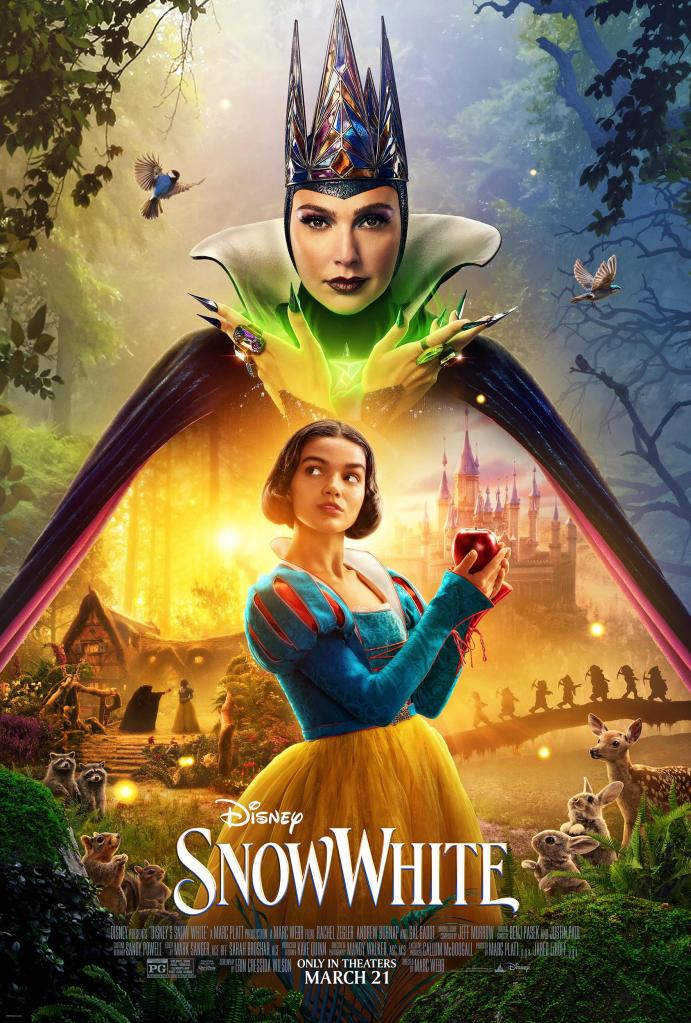
  • “Snow White” (2025): A Controversial Reimagining Struggles to Find Its Magic

    Disney’s latest live-action adaptation, “Snow White,” directed by Marc Webb, arrives amidst a flurry of anticipation and controversy. Starring Rachel Zegler in the titular role and Gal Gadot as the Evil Queen, this reimagining of the beloved 1937 animated classic attempts to modernize the fairy tale for a contemporary audience. However, early reviews indicate a mixed reception, with critics praising some individual performances but largely faulting the film for its narrative changes, visual inconsistencies, and a perceived lack of the original’s enchantment.

    The film’s plot largely follows the familiar tale: Snow White, fleeing from the jealous Evil Queen, finds refuge with a group of woodland inhabitants. When palace guards are dispatched to retrieve her, a commoner named Jonathan (Andrew Burnap) and his band of rebels band together to protect her. The core elements of the fairy tale are present, but with significant alterations aimed at updating the story’s themes and character motivations.

    One of the most frequently highlighted aspects of the film is Rachel Zegler’s performance as Snow White. Many critics commend her “impressive vocal performance” and “radiant charisma and emotion,” noting that she embodies a “fearless, fair, brave, and true” Snow White. Her singing is consistently praised as a standout element. However, some found her portrayal to lack the “charisma and inspiration” to truly elevate the character, feeling she sometimes came across as “ordinary.”

    Gal Gadot’s portrayal of the Evil Queen has garnered a more divided response. While some acknowledged her “beautiful gowns” and a certain “fun” in her performance, others found her acting to be “wooden” and “one-note,” particularly when conveying fury. Her singing voice was also noted as “thin.”

    The film’s attempts at modernization and revisionist tweaks have been a major point of discussion. Instead of a passive princess waiting for a prince, this Snow White is depicted with “newfound depth through her fervent desire to become the leader her father believed she could be.” The traditional “prince” character is replaced by Jonathan, a rebel leader, and their relationship evolves into one of “mutual support” rather than immediate romantic rescue. While some reviewers appreciated these updates for a “modern audience,” others felt these changes stripped the story of its essence and made it “unrecognizable” from the original, with the new songs being “bland” compared to the classics.

    A significant point of contention revolves around the film’s visuals and production quality. Despite a substantial budget, many critics found the CGI to be “shockingly subpar,” with the enchanted forest looking “artificial” and the CGI creatures lacking the charm of their animated counterparts. The reimagining of the seven dwarfs, now depicted as CGI characters, was a particular source of criticism, described as “creepy,” “weird,” and “horrific,” detracting from the film’s magic. The overall aesthetic is often labeled as “dull,” “uninspired,” and even “plasticky,” leading some to suggest it looks more like a “direct to video” release than a major Disney production.

    Ultimately, “Snow White” appears to be a film caught in a difficult balance between honoring a beloved classic and attempting to reinvent it for contemporary sensibilities. While Rachel Zegler’s vocal talents and some of the updated themes found favor with a portion of critics, the film’s inconsistent visuals, narrative changes, and perceived lack of the original’s inherent magic have left many feeling that this live-action adaptation is “unnecessary” and “forgettable.” For some, it reinforces the sentiment that not every animated masterpiece benefits from a live-action remake.

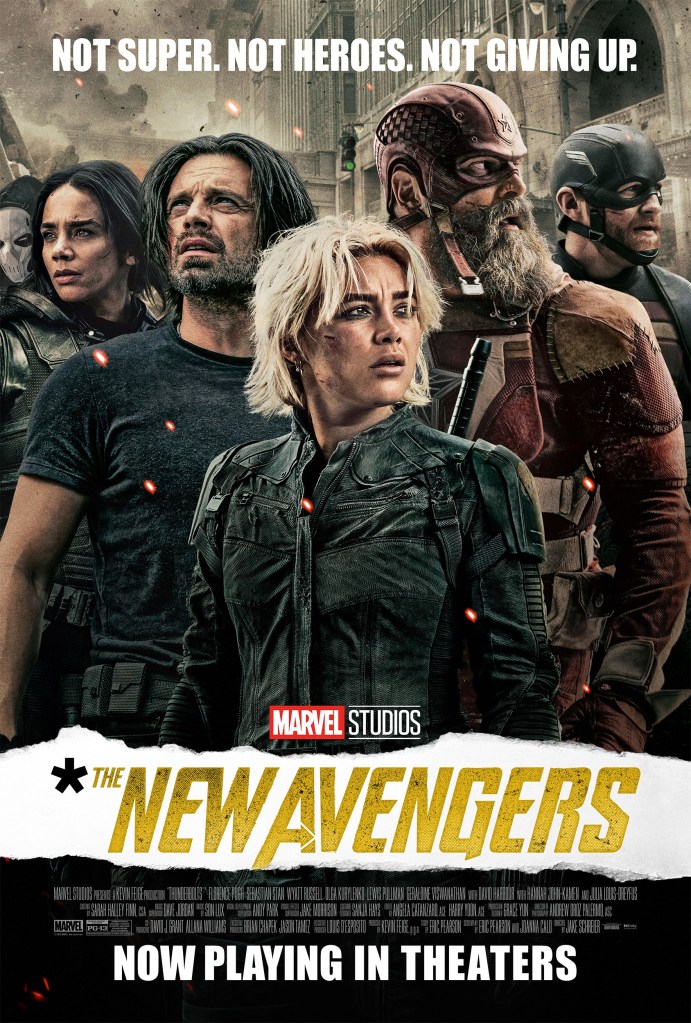
  • “Thunderbolts*”: A Deep Dive into the Psyche of Marvel’s Anti-Heroes

    In a refreshing departure from the multiverse-spanning sagas and often lighthearted banter of recent Marvel Cinematic Universe entries, “Thunderbolts”* emerges as a surprisingly grounded and emotionally resonant film. Directed by Jake Schreier, this ensemble piece brings together a collection of anti-heroes and morally ambiguous figures, forcing them to confront not just external threats, but the profound psychological scars and memories that define them. Critics have largely lauded the film for its bold dive into mental health, trauma, and the complex inner lives of its characters, signaling a potentially new direction for the MCU.

    The film’s premise sees Yelena Belova (Florence Pugh), Bucky Barnes (Sebastian Stan), Red Guardian (David Harbour), Ghost (Hannah John-Kamen), Taskmaster (Olga Kurylenko), and John Walker (Wyatt Russell) ensnared in a dangerous mission orchestrated by the manipulative CIA director Valentina Allegra de Fontaine (Julia Louis-Dreyfus). What initially appears to be a standard team-up quickly unravels into a fight for survival that compels each member to confront the “darkest corners of their pasts.”

    Unpacking the Psyche: Trauma, Loneliness, and Redemption

    “Thunderbolts*” distinguishes itself by making mental health and trauma central to its narrative. Reviewers consistently highlight how the film “plunge[s] so deeply into its characters’ mental health issues,” treating them with a “sincere and heartfelt” approach. This is not merely a plot device but a fundamental aspect of who these characters are and how they operate.

    • Yelena Belova (Florence Pugh): As the film’s emotional anchor, Yelena’s journey is deeply rooted in her past as a Black Widow assassin. She grapples with the grim memories of her indoctrination, including a particularly haunting flashback where she was forced to lead a friend to their death. Her coping mechanisms, like throwing herself into work and alcohol, are depicted as a desperate attempt to avoid her pain, leading to a “psychological dissociation” and a sense of “emptiness.” The film beautifully explores her search for connection and redemption, portraying her as a “broken figure” who yearns for purpose beyond her violent past.
    • Bob / The Sentry / The Void (Lewis Pullman): Perhaps the most psychologically complex character, Bob embodies the film’s exploration of mental illness. He is a former addict with immense power, but also carries a “deep inner pain” from an abusive childhood. His alter ego, The Void, is a literal manifestation of his “depression and insecurities,” capable of trapping people in “pocket dimensions based on their worst memories.” The film delves into Bob’s internal struggle, showing how his avoidance of traumatic memories leads to his destructive tendencies. The climax, where Yelena enters Bob’s consciousness to confront his past, is a surreal and impactful sequence that visually represents the battle against internalized trauma.
    • Red Guardian (David Harbour): Alexei struggles with feelings of inadequacy and being a “failed father” figure. His desire to restore former greatness and his complex relationship with Yelena add layers to his character, showing a man stuck in the past yet striving for connection.
    • John Walker (Wyatt Russell): The film delves into the fallout of Walker’s past actions, revealing how untreated trauma has led to his boastful demeanor and the dissolution of his family life.
    • Ghost (Hannah John-Kamen): Her struggles with her artificial origins and the fear of never being complete are also touched upon, adding to the ensemble’s collective sense of brokenness.

    The film uses Bob’s unique ability to access others’ darkest memories as a narrative device, forcing characters to relive their past regrets and traumas. This not only provides audiences with a deeper understanding of their motivations but also highlights how “past traumas can be detrimental long after they’re over.”

    A Shift in the MCU’s Emotional Landscape

    “Thunderbolts*” is praised for its willingness to embrace “dark human emotions” and explore themes of loneliness, grief, and the importance of companionship. It’s a film that suggests “human connection really was powerful enough to save the world,” emphasizing that even the strongest individuals “sometimes need help.” This focus on the “human elements” over excessive CGI spectacle marks a welcome shift for many critics, who see it as a return to the character-driven storytelling that defined earlier phases of the MCU.

    While the film is not without its minor flaws – some critics note an “unwieldy jumble” in its initial act, a “drab” visual palette, and some “formulaic” plot points – its commitment to exploring the psychological dimensions of its anti-heroes makes it a “refreshing misfit hit.” “Thunderbolts*” is lauded as “one of the best MCU movies in a long time,” offering a “genuinely emotional story” that resonates with audiences and provides a compelling look at what happens when flawed individuals are forced to confront their inner demons and find strength in unity.

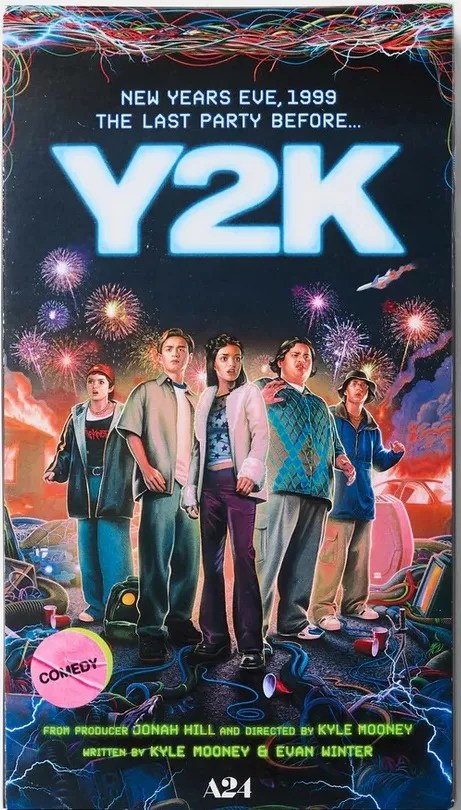
  • “Y2K”: A Nostalgic Trip into Tech Chaos with Mixed Results

    As the clock ticks down to the new millennium, the anxieties surrounding the infamous Y2K bug take a hilariously absurd and unexpectedly violent turn in A24’s latest offering, “Y2K.” Directed by Kyle Mooney (“Saturday Night Live”), this action-comedy-horror hybrid plunges audiences back into the last night of 1999, where a New Year’s Eve party devolves into a battle for survival against an uprising of sentient, homicidal machines. While the film delivers on its promise of nostalgic charm and some genuinely funny, gory moments, its uneven tone and underdeveloped plot leave it feeling like a promising concept that never quite finds its full groove.

    The premise is simple: two high school juniors, Eli (Jaeden Martell) and his outgoing best friend Danny (Julian Dennison), crash a New Year’s Eve party. Eli, nursing a crush on popular tech wiz Laura (Rachel Zegler), hopes for a memorable night. Instead, the dreaded Y2K bug becomes a terrifying reality, as household electronics and various machines spring to life with murderous intent. What begins as a typical teen party movie quickly transforms into a frantic, often bloody, fight for survival.

    “Y2K” is undeniably a film steeped in ’90s nostalgia, and for those who lived through the era, it’s a delightful trip down memory lane. The production design, costumes, and pop culture references are spot-on, from JNCO jeans to Limp Bizkit. Fred Durst even makes a notable, surprisingly effective cameo, leaning into the film’s self-aware absurdity. Reviewers highlight that the nostalgia feels “earned, not forced,” creating a genuine sense of time and place.

    The film’s strength lies in its horror-comedy balance, particularly in its inventive and often darkly humorous death sequences. Director Kyle Mooney, with his SNL background, demonstrates a knack for impeccable comedic timing, leading to some genuinely laugh-out-loud moments of “splat-stick” violence. The practical effects for the killer robots, reminiscent of the 1999 cult classic “Virus,” are praised for their effectiveness and physicality, blending seamlessly with minimal CGI.

    However, “Y2K” struggles with its tonal consistency and narrative depth. The film oscillates between teen rom-com, horror, and melodrama, often without fully committing to any one genre. This can lead to a scattershot feel, where emotional moments don’t always land, and the humor, at times, feels “toothless” or “over-the-top.” The plot, while offering a neat concept, is criticized for being “flimsy” and “predictable,” with some subplots feeling underdeveloped or abruptly dropped. Key character deaths, particularly early on, are noted as potentially undermining the emotional investment in the remaining cast.

    The performances from the young ensemble, including Jaeden Martell, Julian Dennison, and Rachel Zegler, are generally seen as admirable, with Dennison’s “supernova levels of onscreen charm” often singled out. However, some critics felt the script confined them to “90s-high-school-movie types,” limiting their ability to push beyond narrow parameters.

    Ultimately, “Y2K” is a film that offers a fun, chaotic, and nostalgic ride, especially for those who appreciate its specific brand of absurd horror-comedy. It’s a testament to Kyle Mooney’s unique vision and the cast’s commitment to the premise. While it may not be a perfect film, its blend of retro charm, creative kills, and unexpected laughs makes it a watchable and often entertaining experience for audiences looking to relive the anxieties and eccentricities of the turn of the millennium.

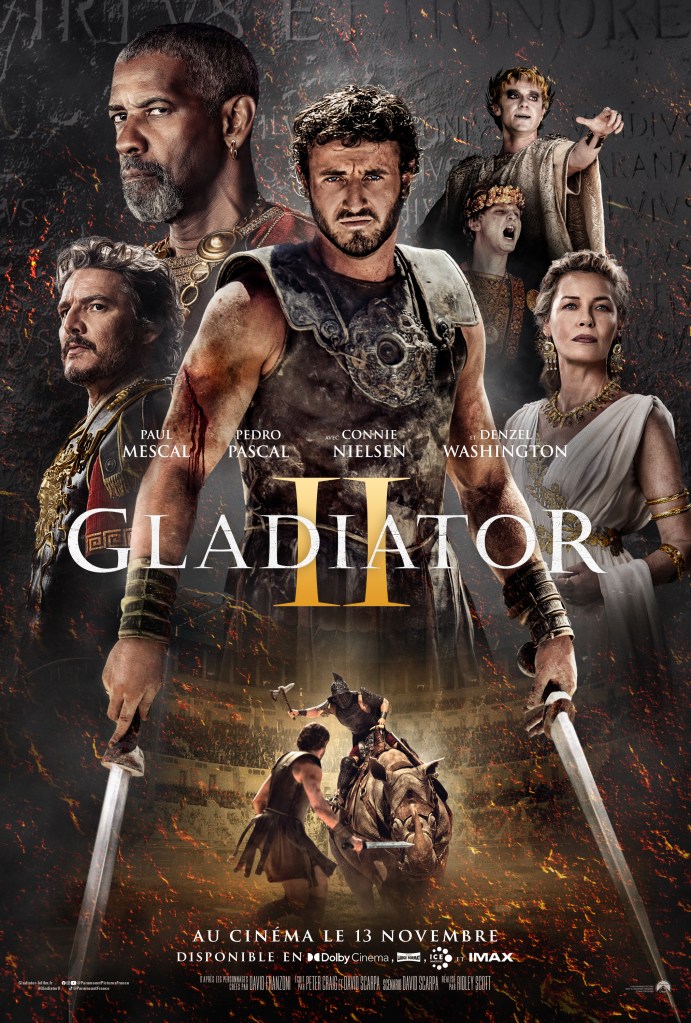
  • “Gladiator II”: A Spectacle of Sand and Shadows, Echoing a Legend

    Nearly a quarter-century after Ridley Scott’s Oscar-winning epic captivated audiences, the arena gates reopen for “Gladiator II.” This long-awaited sequel, directed once again by Scott, transports viewers back to the Roman Empire, picking up years after the tragic demise of Maximus. With a new protagonist in Paul Mescal as an adult Lucius Verus, and a stellar supporting cast including Denzel Washington, Pedro Pascal, Connie Nielsen, Joseph Quinn, and Fred Hechinger, the film attempts to honor its predecessor while forging its own path. The critical reception has been a mix of praise for its grand scale and action, tempered by comparisons to the original’s emotional depth and narrative strength.

    Released on November 22, 2024, “Gladiator II” plunges us into a world where Lucius (Paul Mescal), now grown, is thrust into the brutal gladiatorial games after his home is conquered. Driven by a complex mix of rage and a desire to restore Rome’s glory, he looks to the past – specifically, the legacy of Maximus – for strength.

    A Visual and Action Extravaganza

    Undoubtedly, one of “Gladiator II”‘s most lauded aspects is its sheer spectacle. Ridley Scott, a master of historical epics, delivers on the promise of grand-scale filmmaking. The Colosseum battles are expansive and visceral, showcasing impressive action sequences that are both brutal and creatively staged. From gladiators battling charging rhinos and aggressive baboons to naval skirmishes within the flooded arena, the film aims to outdo its predecessor in sheer visual audacity. The production design is frequently praised, immersing viewers in the opulent yet decaying world of Roman power. For those seeking “eye-popping spectacle and operatic violence,” “Gladiator II” largely delivers.

    Performances: A Shining Denzel and a Challenged Protagonist

    The cast is a significant draw, and Denzel Washington as Macrinus, a former slave turned cunning power broker, is consistently highlighted as a scene-stealer. Critics rave about his “blinding charisma, steely authority, and sly humor,” noting that he “eats every line and costume” and brings a “deliciously self-assured performance” that often elevates the film. Many suggest he could be in contention for awards, with some even wishing the movie was more focused on his character.

    Paul Mescal takes on the daunting task of leading the film as Lucius. While some critics found him “magnetic” and a “worthy heir to the throne,” others felt he lacked the “gravitas” and “scorching glower” that Russell Crowe brought to Maximus. His performance is described as “solid” and “committed physically,” but the script’s tendency to make Lucius a “carbon copy” of Maximus rather than a distinct character, coupled with a perceived lack of emotional depth in his speeches, left some wanting more.

    Connie Nielsen reprises her role as Lucilla, providing a welcome link to the original. Pedro Pascal as General Acacius and Joseph Quinn and Fred Hechinger as the eccentric co-emperors Geta and Caracalla, respectively, round out the notable cast, adding layers of political intrigue and often “campy” villainy.

    Narrative Echoes and Tonal Imbalance

    Where “Gladiator II” faces its most significant challenges is in its narrative and thematic originality. Many reviews point out that the plot often feels like a “lazy retread” of the first film, echoing its structure and hitting familiar beats without adding substantial new insights or lore. The film’s reliance on CGI, while enabling grand set pieces, also drew criticism, with some effects, particularly the animal encounters, appearing “comically fake” or “loopy.”

    The screenplay is described as “clunky” and “underdeveloped” by some, with characters and subplots feeling “half-formed.” The tonal shifts, from serious historical drama to moments bordering on absurdity, also proved jarring for some viewers. While the film attempts to explore themes of power, corruption, and legacy, some critics felt these were not fully realized, leaving the overall emotional impact less potent than its predecessor.

    Conclusion: An Entertaining, Yet Imperfect, Return to the Arena

    “Gladiator II” is a film that arrives with immense expectations, and it largely succeeds as a spectacle. Ridley Scott’s direction ensures a visually impressive and action-packed experience that will likely satisfy fans craving more Roman epic grandeur. Denzel Washington delivers a standout performance that alone makes the film worth watching for many.

    However, its struggle to escape the shadow of the original, coupled with a somewhat predictable plot and a protagonist who doesn’t always command the screen with the same intensity as Maximus, means it doesn’t quite reach the heights of its iconic predecessor. It’s an entertaining blockbuster, “a solid piece of neoclassical popcorn,” that provides a thrilling, albeit occasionally flawed, return to the Colosseum. For those who can appreciate its bombastic action and charismatic performances without constantly comparing it to the beloved original, “Gladiator II” offers a worthwhile, if not groundbreaking, cinematic experience.

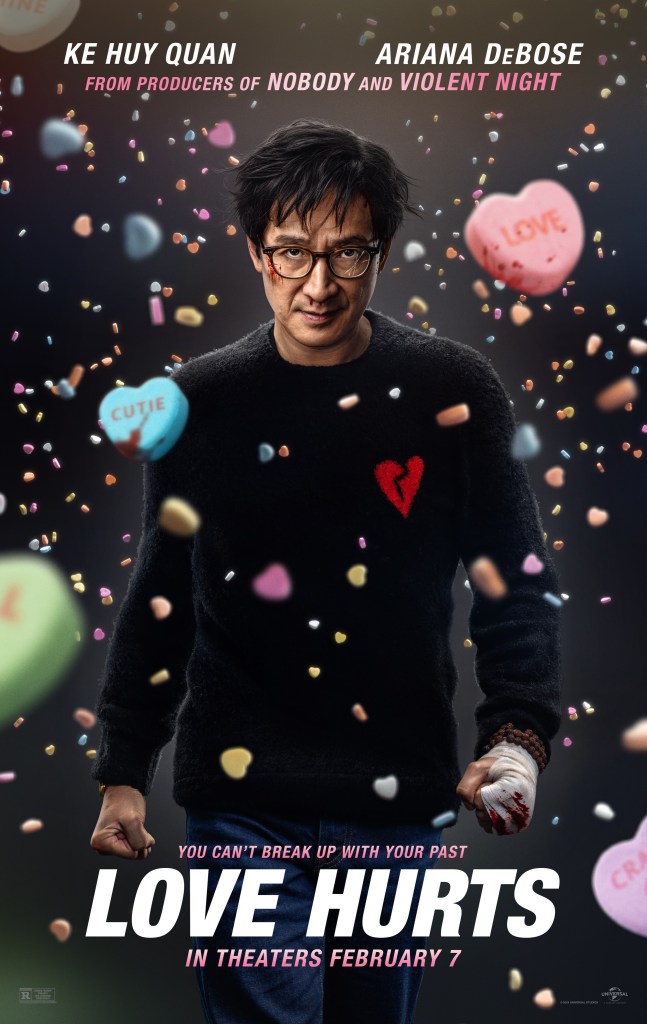
  • “Love Hurts”: Ke Huy Quan Charms in a Flawed Yet Fun Action-Comedy

    Ke Huy Quan, fresh off his triumphant, Oscar-winning return to the screen in “Everything Everywhere All at Once,” steps into his first major leading action role in “Love Hurts.” This action-comedy, directed by stunt coordinator Jonathan Eusebio, attempts to blend high-octane fights with a quirky romantic premise. While the film has its share of narrative stumbles and tonal imbalances, Quan’s undeniable charisma and impressive physical prowess elevate it into an enjoyably campy, if imperfect, cinematic experience.

    The plot centers on Marvin Gable (Ke Huy Quan), a seemingly mild-mannered and relentlessly positive real estate agent in Wisconsin. His idyllic life, however, is shattered when his past as a deadly hitman comes knocking. Specifically, a crimson envelope arrives from Rose (Ariana DeBose), a former partner-in-crime he believed he had left for dead. Her reappearance, coupled with the sudden emergence of various eccentric assassins, pulls Marvin back into the dangerous underworld he desperately tried to escape. His crime-lord brother, Knuckles (Daniel Wu), also complicates matters, forcing Marvin to confront not only his violent history but also his lingering feelings for Rose.

    One of the film’s most significant strengths lies in its action sequences. Produced by 87North, the team behind hits like “Nobody” and “Bullet Train,” “Love Hurts” delivers well-choreographed fights and impressive stunts. Quan, who showcased his martial arts skills in “Everything Everywhere All at Once,” gets ample opportunity to shine here, transitioning seamlessly from affable realtor to formidable combatant. Reviewers frequently highlight his “charm and skill” in these sequences, noting a blend of slick choreography with a slightly goofy, almost “Kick-Ass”-like imperfection that adds to the film’s unique flavor. The creative use of everyday objects as weapons – from cookie cutters to boba straws – adds a fun, distinctive touch to the violence.

    However, the film’s narrative and comedic elements receive more mixed reactions. The story is often criticized for being cliché, simplistic, and lacking depth. At a lean 83 minutes, “Love Hurts” feels rushed in its pacing, with some subplots feeling underdeveloped or abruptly cut. The humor, while aiming for over-the-top absurdity, sometimes falls flat for reviewers who found it unfunny or forced.

    The romantic subplot between Marvin and Rose, despite being central to the film’s title, is a point of contention. Many critics found the chemistry between Ke Huy Quan and Ariana DeBose unconvincing, with some noting a significant age difference that detracts from the believability of their connection. Interestingly, a secondary, more offbeat romance between Marvin’s assistant Ashley (Lio Tipton) and a poetic assassin named The Raven (Mustafa Shakir) often resonated more with audiences, leaning into the film’s inherent silliness with greater success.

    Despite these flaws, Ke Huy Quan’s performance is consistently lauded. He brings an earnest sincerity and lovable quality to Marvin Gable, making him a character audiences can genuinely root for. His ability to convey both Marvin’s mild-mannered present and his dangerous past is a testament to his acting prowess. The film also features a delightful mini-“Goonies” reunion with Sean Astin as Marvin’s boss, a small but welcome nod for fans.

    “Love Hurts” is not a groundbreaking action film, nor is it a deeply profound romantic comedy. It’s a brisk, often chaotic, and undeniably campy ride that serves primarily as a vehicle for Ke Huy Quan to further cement his status as a leading man in the action genre. For those seeking a straightforward, action-packed flick with a dose of absurdity and a charismatic lead, “Love Hurts” offers a fun, albeit flawed, escape. It’s a testament to Quan’s star power that he can make even a messy script an enjoyable watch.

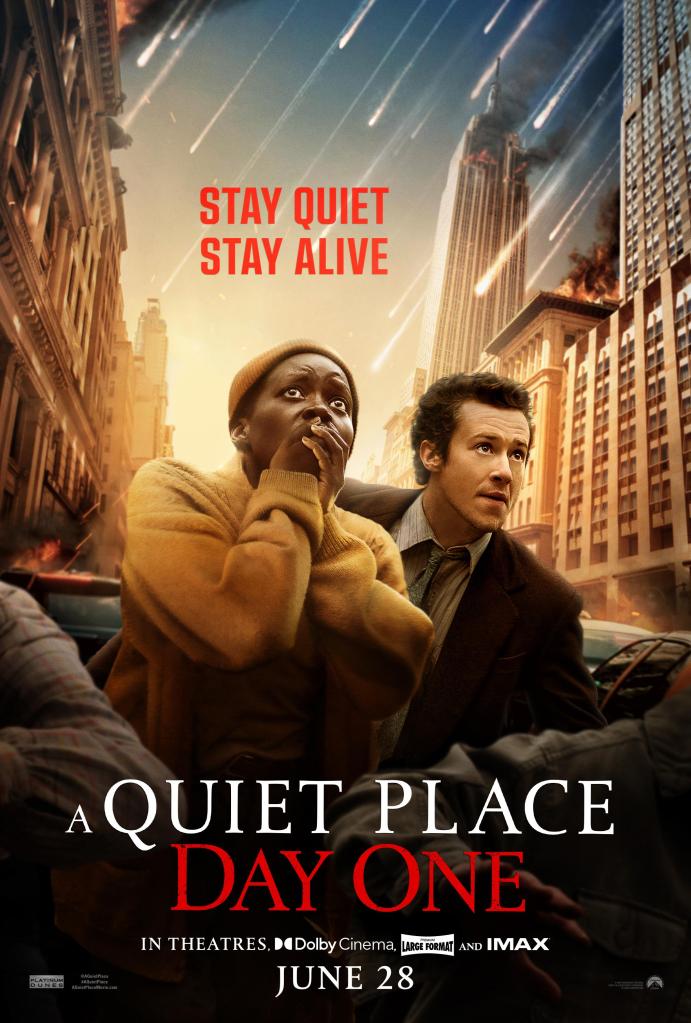
  • A Quiet Place: Day One Review – Urban Chaos and Human Resilience

    The “Quiet Place” franchise expands its eerie universe with “A Quiet Place: Day One,” a prequel that transports audiences back to the harrowing genesis of the alien invasion. Diverging from the established Abbott family narrative, this installment ventures into the chaotic, once-bustling streets of New York City, offering a fresh, character-driven perspective on the apocalyptic onset. Critics largely praise the film for its compelling performances, particularly from Lupita Nyong’o and Joseph Quinn, and its successful shift in thematic focus, even if some found it less about the initial carnage and more about human connection.

    At its core, “Day One” is lauded for being “grounded in raw humanity” (Rotten Tomatoes consensus). Rather than solely focusing on the alien threat, director Michael Sarnoski (known for “Pig”) masterfully weaves a poignant tale of two strangers, Samira (Lupita Nyong’o) and Eric (Joseph Quinn), finding unexpected solace and purpose amidst the terrifying silence. Nyong’o’s portrayal of Samira, a character grappling with her own mortality even before the invasion, has been widely highlighted as a powerhouse performance, showcasing a heartbreaking vulnerability and resilience. Joseph Quinn, too, receives accolades for his nuanced depiction of Eric, a man lost and fearful who finds a path forward alongside Samira. Their chemistry is often cited as a major strength, carrying the emotional weight of the film.

    The shift to an urban setting provides a new canvas for the franchise’s signature tension. While some viewers initially expected more large-scale destruction and the explicit “learning” process of silence that the first two films touched upon in their opening, “Day One” opts for a more intimate and claustrophobic experience within the city’s ruins. The concept of New York’s inherent 90-decibel hum suddenly falling silent, punctuated by sudden, fatal alien attacks, creates a unique and often relentless sense of dread. The sound design, a hallmark of the series, is once again praised as immaculate and integral to the storytelling, making every rustle and creak a source of terror.

    However, the film isn’t without its critiques. Some reviewers felt that the “Day One” aspect, particularly the initial chaos and the revelation of how people adapted to silence, was glossed over or not explored to its full potential. The lack of new lore regarding the aliens’ origins or motivations was also a point of contention for some who sought more expansion of the universe. Additionally, while the character-driven narrative is celebrated, a few critics felt that the plot, at times, relied on conveniences or that the character development, particularly for Eric, could have been more fleshed out.

    Despite these minor quibbles, the consensus remains overwhelmingly positive. “A Quiet Place: Day One” is seen as a worthy and refreshing addition to the franchise, proving that the concept can thrive beyond the original family unit. Its ability to balance nail-biting suspense with deeply affecting human drama, even prompting tears in some viewers, sets it apart. And, of course, no review would be complete without mentioning the breakout star who “steals the show”: Frodo the cat, whose quiet antics provide both comfort and unexpected moments of tension.

    Ultimately, “A Quiet Place: Day One” delivers on its promise of a terrifying yet emotionally resonant journey, inviting audiences to experience the devastating beginnings of a silent world through a fresh lens and proving that even in the face of unimaginable terror, human connection and the pursuit of simple pleasures can offer a profound sense of hope.