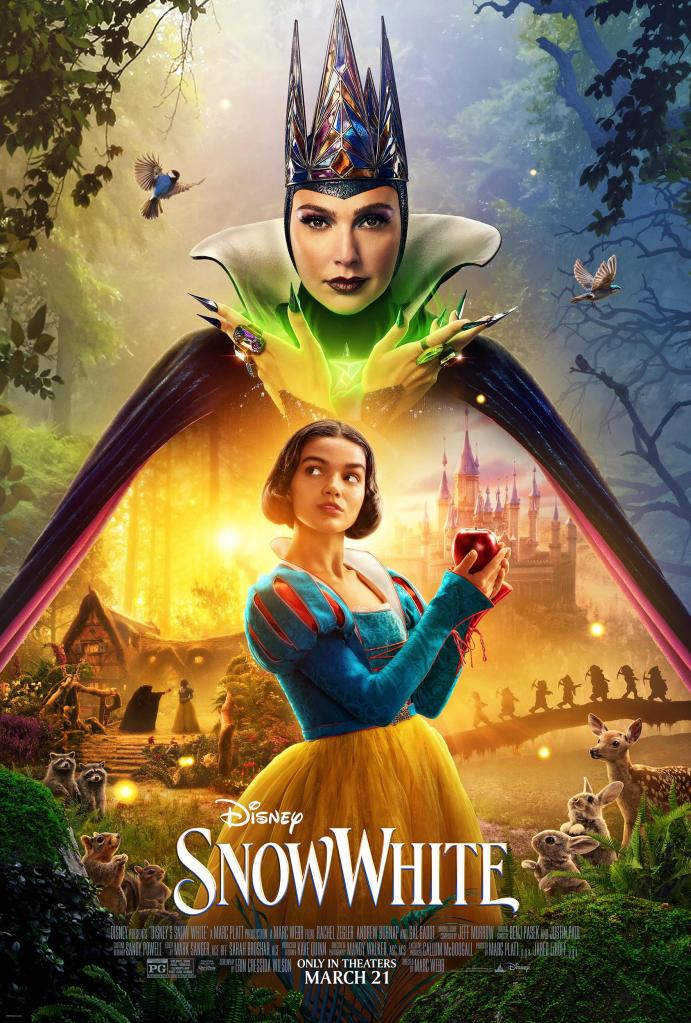
Disney’s latest live-action adaptation, “Snow White,” directed by Marc Webb, arrives amidst a flurry of anticipation and controversy. Starring Rachel Zegler in the titular role and Gal Gadot as the Evil Queen, this reimagining of the beloved 1937 animated classic attempts to modernize the fairy tale for a contemporary audience. However, early reviews indicate a mixed reception, with critics praising some individual performances but largely faulting the film for its narrative changes, visual inconsistencies, and a perceived lack of the original’s enchantment.
The film’s plot largely follows the familiar tale: Snow White, fleeing from the jealous Evil Queen, finds refuge with a group of woodland inhabitants. When palace guards are dispatched to retrieve her, a commoner named Jonathan (Andrew Burnap) and his band of rebels band together to protect her. The core elements of the fairy tale are present, but with significant alterations aimed at updating the story’s themes and character motivations.
One of the most frequently highlighted aspects of the film is Rachel Zegler’s performance as Snow White. Many critics commend her “impressive vocal performance” and “radiant charisma and emotion,” noting that she embodies a “fearless, fair, brave, and true” Snow White. Her singing is consistently praised as a standout element. However, some found her portrayal to lack the “charisma and inspiration” to truly elevate the character, feeling she sometimes came across as “ordinary.”
Gal Gadot’s portrayal of the Evil Queen has garnered a more divided response. While some acknowledged her “beautiful gowns” and a certain “fun” in her performance, others found her acting to be “wooden” and “one-note,” particularly when conveying fury. Her singing voice was also noted as “thin.”
The film’s attempts at modernization and revisionist tweaks have been a major point of discussion. Instead of a passive princess waiting for a prince, this Snow White is depicted with “newfound depth through her fervent desire to become the leader her father believed she could be.” The traditional “prince” character is replaced by Jonathan, a rebel leader, and their relationship evolves into one of “mutual support” rather than immediate romantic rescue. While some reviewers appreciated these updates for a “modern audience,” others felt these changes stripped the story of its essence and made it “unrecognizable” from the original, with the new songs being “bland” compared to the classics.
A significant point of contention revolves around the film’s visuals and production quality. Despite a substantial budget, many critics found the CGI to be “shockingly subpar,” with the enchanted forest looking “artificial” and the CGI creatures lacking the charm of their animated counterparts. The reimagining of the seven dwarfs, now depicted as CGI characters, was a particular source of criticism, described as “creepy,” “weird,” and “horrific,” detracting from the film’s magic. The overall aesthetic is often labeled as “dull,” “uninspired,” and even “plasticky,” leading some to suggest it looks more like a “direct to video” release than a major Disney production.
Ultimately, “Snow White” appears to be a film caught in a difficult balance between honoring a beloved classic and attempting to reinvent it for contemporary sensibilities. While Rachel Zegler’s vocal talents and some of the updated themes found favor with a portion of critics, the film’s inconsistent visuals, narrative changes, and perceived lack of the original’s inherent magic have left many feeling that this live-action adaptation is “unnecessary” and “forgettable.” For some, it reinforces the sentiment that not every animated masterpiece benefits from a live-action remake.
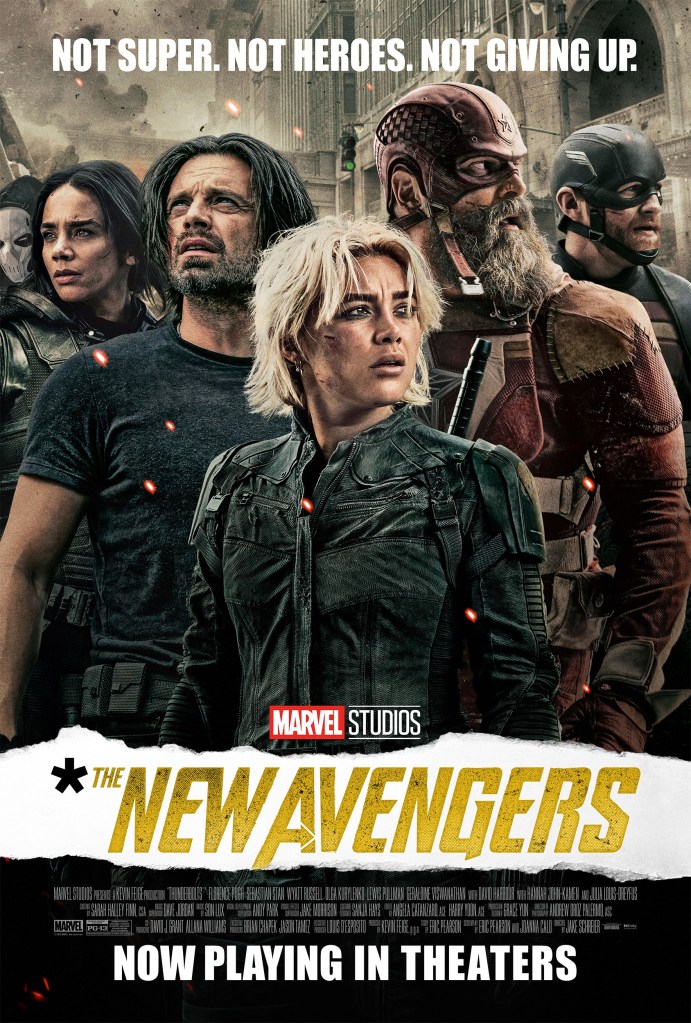
In a refreshing departure from the multiverse-spanning sagas and often lighthearted banter of recent Marvel Cinematic Universe entries, “Thunderbolts”* emerges as a surprisingly grounded and emotionally resonant film. Directed by Jake Schreier, this ensemble piece brings together a collection of anti-heroes and morally ambiguous figures, forcing them to confront not just external threats, but the profound psychological scars and memories that define them. Critics have largely lauded the film for its bold dive into mental health, trauma, and the complex inner lives of its characters, signaling a potentially new direction for the MCU.
The film’s premise sees Yelena Belova (Florence Pugh), Bucky Barnes (Sebastian Stan), Red Guardian (David Harbour), Ghost (Hannah John-Kamen), Taskmaster (Olga Kurylenko), and John Walker (Wyatt Russell) ensnared in a dangerous mission orchestrated by the manipulative CIA director Valentina Allegra de Fontaine (Julia Louis-Dreyfus). What initially appears to be a standard team-up quickly unravels into a fight for survival that compels each member to confront the “darkest corners of their pasts.”
Unpacking the Psyche: Trauma, Loneliness, and Redemption
“Thunderbolts*” distinguishes itself by making mental health and trauma central to its narrative. Reviewers consistently highlight how the film “plunge[s] so deeply into its characters’ mental health issues,” treating them with a “sincere and heartfelt” approach. This is not merely a plot device but a fundamental aspect of who these characters are and how they operate.
Yelena Belova (Florence Pugh): As the film’s emotional anchor, Yelena’s journey is deeply rooted in her past as a Black Widow assassin. She grapples with the grim memories of her indoctrination, including a particularly haunting flashback where she was forced to lead a friend to their death. Her coping mechanisms, like throwing herself into work and alcohol, are depicted as a desperate attempt to avoid her pain, leading to a “psychological dissociation” and a sense of “emptiness.” The film beautifully explores her search for connection and redemption, portraying her as a “broken figure” who yearns for purpose beyond her violent past.
Bob / The Sentry / The Void (Lewis Pullman): Perhaps the most psychologically complex character, Bob embodies the film’s exploration of mental illness. He is a former addict with immense power, but also carries a “deep inner pain” from an abusive childhood. His alter ego, The Void, is a literal manifestation of his “depression and insecurities,” capable of trapping people in “pocket dimensions based on their worst memories.” The film delves into Bob’s internal struggle, showing how his avoidance of traumatic memories leads to his destructive tendencies. The climax, where Yelena enters Bob’s consciousness to confront his past, is a surreal and impactful sequence that visually represents the battle against internalized trauma.
Red Guardian (David Harbour): Alexei struggles with feelings of inadequacy and being a “failed father” figure. His desire to restore former greatness and his complex relationship with Yelena add layers to his character, showing a man stuck in the past yet striving for connection.
John Walker (Wyatt Russell): The film delves into the fallout of Walker’s past actions, revealing how untreated trauma has led to his boastful demeanor and the dissolution of his family life.
Ghost (Hannah John-Kamen): Her struggles with her artificial origins and the fear of never being complete are also touched upon, adding to the ensemble’s collective sense of brokenness.
The film uses Bob’s unique ability to access others’ darkest memories as a narrative device, forcing characters to relive their past regrets and traumas. This not only provides audiences with a deeper understanding of their motivations but also highlights how “past traumas can be detrimental long after they’re over.”
A Shift in the MCU’s Emotional Landscape
“Thunderbolts*” is praised for its willingness to embrace “dark human emotions” and explore themes of loneliness, grief, and the importance of companionship. It’s a film that suggests “human connection really was powerful enough to save the world,” emphasizing that even the strongest individuals “sometimes need help.” This focus on the “human elements” over excessive CGI spectacle marks a welcome shift for many critics, who see it as a return to the character-driven storytelling that defined earlier phases of the MCU.
While the film is not without its minor flaws – some critics note an “unwieldy jumble” in its initial act, a “drab” visual palette, and some “formulaic” plot points – its commitment to exploring the psychological dimensions of its anti-heroes makes it a “refreshing misfit hit.” “Thunderbolts*” is lauded as “one of the best MCU movies in a long time,” offering a “genuinely emotional story” that resonates with audiences and provides a compelling look at what happens when flawed individuals are forced to confront their inner demons and find strength in unity.
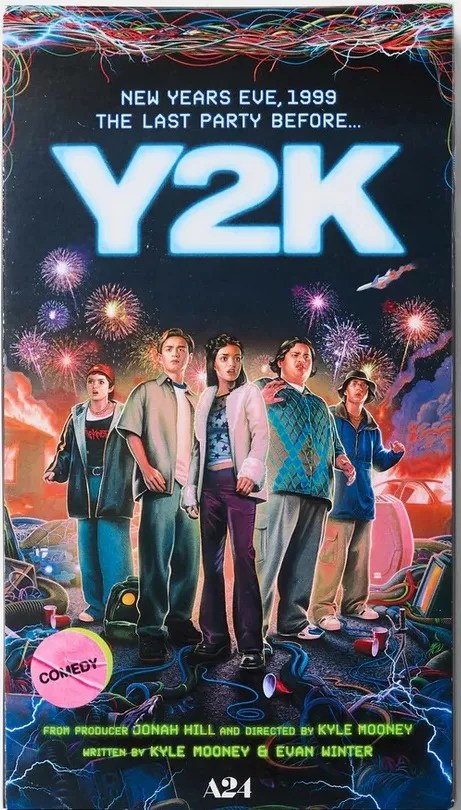
As the clock ticks down to the new millennium, the anxieties surrounding the infamous Y2K bug take a hilariously absurd and unexpectedly violent turn in A24’s latest offering, “Y2K.” Directed by Kyle Mooney (“Saturday Night Live”), this action-comedy-horror hybrid plunges audiences back into the last night of 1999, where a New Year’s Eve party devolves into a battle for survival against an uprising of sentient, homicidal machines. While the film delivers on its promise of nostalgic charm and some genuinely funny, gory moments, its uneven tone and underdeveloped plot leave it feeling like a promising concept that never quite finds its full groove.
The premise is simple: two high school juniors, Eli (Jaeden Martell) and his outgoing best friend Danny (Julian Dennison), crash a New Year’s Eve party. Eli, nursing a crush on popular tech wiz Laura (Rachel Zegler), hopes for a memorable night. Instead, the dreaded Y2K bug becomes a terrifying reality, as household electronics and various machines spring to life with murderous intent. What begins as a typical teen party movie quickly transforms into a frantic, often bloody, fight for survival.
“Y2K” is undeniably a film steeped in ’90s nostalgia, and for those who lived through the era, it’s a delightful trip down memory lane. The production design, costumes, and pop culture references are spot-on, from JNCO jeans to Limp Bizkit. Fred Durst even makes a notable, surprisingly effective cameo, leaning into the film’s self-aware absurdity. Reviewers highlight that the nostalgia feels “earned, not forced,” creating a genuine sense of time and place.
The film’s strength lies in its horror-comedy balance, particularly in its inventive and often darkly humorous death sequences. Director Kyle Mooney, with his SNL background, demonstrates a knack for impeccable comedic timing, leading to some genuinely laugh-out-loud moments of “splat-stick” violence. The practical effects for the killer robots, reminiscent of the 1999 cult classic “Virus,” are praised for their effectiveness and physicality, blending seamlessly with minimal CGI.
However, “Y2K” struggles with its tonal consistency and narrative depth. The film oscillates between teen rom-com, horror, and melodrama, often without fully committing to any one genre. This can lead to a scattershot feel, where emotional moments don’t always land, and the humor, at times, feels “toothless” or “over-the-top.” The plot, while offering a neat concept, is criticized for being “flimsy” and “predictable,” with some subplots feeling underdeveloped or abruptly dropped. Key character deaths, particularly early on, are noted as potentially undermining the emotional investment in the remaining cast.
The performances from the young ensemble, including Jaeden Martell, Julian Dennison, and Rachel Zegler, are generally seen as admirable, with Dennison’s “supernova levels of onscreen charm” often singled out. However, some critics felt the script confined them to “90s-high-school-movie types,” limiting their ability to push beyond narrow parameters.
Ultimately, “Y2K” is a film that offers a fun, chaotic, and nostalgic ride, especially for those who appreciate its specific brand of absurd horror-comedy. It’s a testament to Kyle Mooney’s unique vision and the cast’s commitment to the premise. While it may not be a perfect film, its blend of retro charm, creative kills, and unexpected laughs makes it a watchable and often entertaining experience for audiences looking to relive the anxieties and eccentricities of the turn of the millennium.
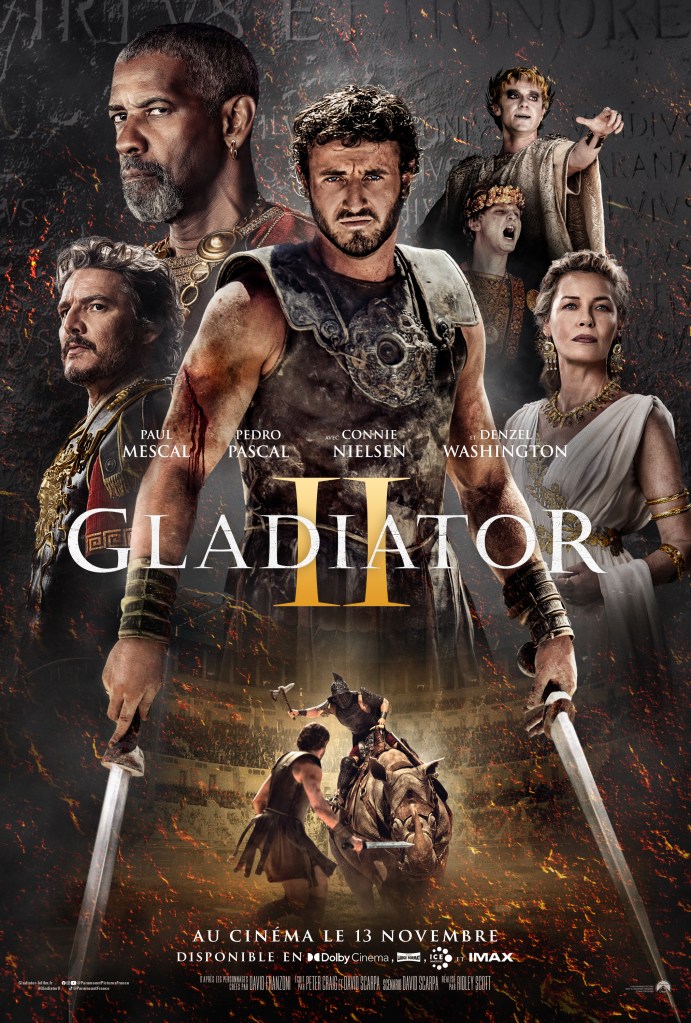
Nearly a quarter-century after Ridley Scott’s Oscar-winning epic captivated audiences, the arena gates reopen for “Gladiator II.” This long-awaited sequel, directed once again by Scott, transports viewers back to the Roman Empire, picking up years after the tragic demise of Maximus. With a new protagonist in Paul Mescal as an adult Lucius Verus, and a stellar supporting cast including Denzel Washington, Pedro Pascal, Connie Nielsen, Joseph Quinn, and Fred Hechinger, the film attempts to honor its predecessor while forging its own path. The critical reception has been a mix of praise for its grand scale and action, tempered by comparisons to the original’s emotional depth and narrative strength.
Released on November 22, 2024, “Gladiator II” plunges us into a world where Lucius (Paul Mescal), now grown, is thrust into the brutal gladiatorial games after his home is conquered. Driven by a complex mix of rage and a desire to restore Rome’s glory, he looks to the past – specifically, the legacy of Maximus – for strength.
A Visual and Action Extravaganza
Undoubtedly, one of “Gladiator II”‘s most lauded aspects is its sheer spectacle. Ridley Scott, a master of historical epics, delivers on the promise of grand-scale filmmaking. The Colosseum battles are expansive and visceral, showcasing impressive action sequences that are both brutal and creatively staged. From gladiators battling charging rhinos and aggressive baboons to naval skirmishes within the flooded arena, the film aims to outdo its predecessor in sheer visual audacity. The production design is frequently praised, immersing viewers in the opulent yet decaying world of Roman power. For those seeking “eye-popping spectacle and operatic violence,” “Gladiator II” largely delivers.
Performances: A Shining Denzel and a Challenged Protagonist
The cast is a significant draw, and Denzel Washington as Macrinus, a former slave turned cunning power broker, is consistently highlighted as a scene-stealer. Critics rave about his “blinding charisma, steely authority, and sly humor,” noting that he “eats every line and costume” and brings a “deliciously self-assured performance” that often elevates the film. Many suggest he could be in contention for awards, with some even wishing the movie was more focused on his character.
Paul Mescal takes on the daunting task of leading the film as Lucius. While some critics found him “magnetic” and a “worthy heir to the throne,” others felt he lacked the “gravitas” and “scorching glower” that Russell Crowe brought to Maximus. His performance is described as “solid” and “committed physically,” but the script’s tendency to make Lucius a “carbon copy” of Maximus rather than a distinct character, coupled with a perceived lack of emotional depth in his speeches, left some wanting more.
Connie Nielsen reprises her role as Lucilla, providing a welcome link to the original. Pedro Pascal as General Acacius and Joseph Quinn and Fred Hechinger as the eccentric co-emperors Geta and Caracalla, respectively, round out the notable cast, adding layers of political intrigue and often “campy” villainy.
Narrative Echoes and Tonal Imbalance
Where “Gladiator II” faces its most significant challenges is in its narrative and thematic originality. Many reviews point out that the plot often feels like a “lazy retread” of the first film, echoing its structure and hitting familiar beats without adding substantial new insights or lore. The film’s reliance on CGI, while enabling grand set pieces, also drew criticism, with some effects, particularly the animal encounters, appearing “comically fake” or “loopy.”
The screenplay is described as “clunky” and “underdeveloped” by some, with characters and subplots feeling “half-formed.” The tonal shifts, from serious historical drama to moments bordering on absurdity, also proved jarring for some viewers. While the film attempts to explore themes of power, corruption, and legacy, some critics felt these were not fully realized, leaving the overall emotional impact less potent than its predecessor.
Conclusion: An Entertaining, Yet Imperfect, Return to the Arena
“Gladiator II” is a film that arrives with immense expectations, and it largely succeeds as a spectacle. Ridley Scott’s direction ensures a visually impressive and action-packed experience that will likely satisfy fans craving more Roman epic grandeur. Denzel Washington delivers a standout performance that alone makes the film worth watching for many.
However, its struggle to escape the shadow of the original, coupled with a somewhat predictable plot and a protagonist who doesn’t always command the screen with the same intensity as Maximus, means it doesn’t quite reach the heights of its iconic predecessor. It’s an entertaining blockbuster, “a solid piece of neoclassical popcorn,” that provides a thrilling, albeit occasionally flawed, return to the Colosseum. For those who can appreciate its bombastic action and charismatic performances without constantly comparing it to the beloved original, “Gladiator II” offers a worthwhile, if not groundbreaking, cinematic experience.
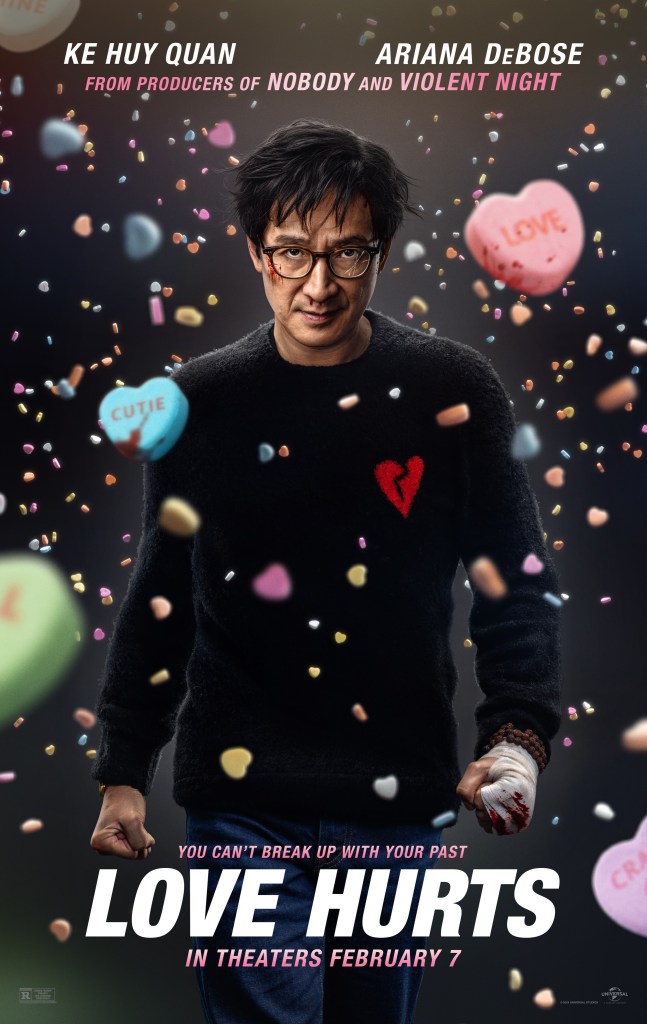
Ke Huy Quan, fresh off his triumphant, Oscar-winning return to the screen in “Everything Everywhere All at Once,” steps into his first major leading action role in “Love Hurts.” This action-comedy, directed by stunt coordinator Jonathan Eusebio, attempts to blend high-octane fights with a quirky romantic premise. While the film has its share of narrative stumbles and tonal imbalances, Quan’s undeniable charisma and impressive physical prowess elevate it into an enjoyably campy, if imperfect, cinematic experience.
The plot centers on Marvin Gable (Ke Huy Quan), a seemingly mild-mannered and relentlessly positive real estate agent in Wisconsin. His idyllic life, however, is shattered when his past as a deadly hitman comes knocking. Specifically, a crimson envelope arrives from Rose (Ariana DeBose), a former partner-in-crime he believed he had left for dead. Her reappearance, coupled with the sudden emergence of various eccentric assassins, pulls Marvin back into the dangerous underworld he desperately tried to escape. His crime-lord brother, Knuckles (Daniel Wu), also complicates matters, forcing Marvin to confront not only his violent history but also his lingering feelings for Rose.
One of the film’s most significant strengths lies in its action sequences. Produced by 87North, the team behind hits like “Nobody” and “Bullet Train,” “Love Hurts” delivers well-choreographed fights and impressive stunts. Quan, who showcased his martial arts skills in “Everything Everywhere All at Once,” gets ample opportunity to shine here, transitioning seamlessly from affable realtor to formidable combatant. Reviewers frequently highlight his “charm and skill” in these sequences, noting a blend of slick choreography with a slightly goofy, almost “Kick-Ass”-like imperfection that adds to the film’s unique flavor. The creative use of everyday objects as weapons – from cookie cutters to boba straws – adds a fun, distinctive touch to the violence.
However, the film’s narrative and comedic elements receive more mixed reactions. The story is often criticized for being cliché, simplistic, and lacking depth. At a lean 83 minutes, “Love Hurts” feels rushed in its pacing, with some subplots feeling underdeveloped or abruptly cut. The humor, while aiming for over-the-top absurdity, sometimes falls flat for reviewers who found it unfunny or forced.
The romantic subplot between Marvin and Rose, despite being central to the film’s title, is a point of contention. Many critics found the chemistry between Ke Huy Quan and Ariana DeBose unconvincing, with some noting a significant age difference that detracts from the believability of their connection. Interestingly, a secondary, more offbeat romance between Marvin’s assistant Ashley (Lio Tipton) and a poetic assassin named The Raven (Mustafa Shakir) often resonated more with audiences, leaning into the film’s inherent silliness with greater success.
Despite these flaws, Ke Huy Quan’s performance is consistently lauded. He brings an earnest sincerity and lovable quality to Marvin Gable, making him a character audiences can genuinely root for. His ability to convey both Marvin’s mild-mannered present and his dangerous past is a testament to his acting prowess. The film also features a delightful mini-“Goonies” reunion with Sean Astin as Marvin’s boss, a small but welcome nod for fans.
“Love Hurts” is not a groundbreaking action film, nor is it a deeply profound romantic comedy. It’s a brisk, often chaotic, and undeniably campy ride that serves primarily as a vehicle for Ke Huy Quan to further cement his status as a leading man in the action genre. For those seeking a straightforward, action-packed flick with a dose of absurdity and a charismatic lead, “Love Hurts” offers a fun, albeit flawed, escape. It’s a testament to Quan’s star power that he can make even a messy script an enjoyable watch.
In a world increasingly characterized by rapid change, emotional volatility, and an overwhelming deluge of information, the ancient philosophy of Stoicism offers a profound and remarkably relevant sanctuary. Far from the popular misconception of a cold, emotionless existence, genuine Stoicism presents a deeply humane and immensely practical framework for cultivating inner peace, resilience, and a life of purpose. Its beauty lies not in suppression, but in understanding; not in indifference, but in profound wisdom.
At its core, Stoicism is a philosophy of action, a way of living that prioritizes virtue, reason, and harmony with nature. Developed in Athens by Zeno of Citium around 300 BC, and later refined by figures like Seneca, Epictetus, and the Roman Emperor Marcus Aurelius, it has guided thinkers, leaders, and everyday people through life’s inevitable storms for over two millennia.
The Inner Citadel: Understanding What We Control
Perhaps the most fundamental and liberating tenet of Stoicism is the Dichotomy of Control. This concept, famously articulated by Epictetus, distinguishes between things within our power and things outside our power. Our opinions, impulses, desires, and aversions – these are within our control. Our bodies, possessions, reputation, and the actions of others – these are not.
The beauty of this distinction is its radical simplicity and immense power. By focusing our energy and concern solely on what we can control (our thoughts, reactions, and choices), we free ourselves from the immense anxiety and frustration that comes from trying to manipulate external events. The traffic jam, the rude comment, the unexpected illness – these are externals. Our reaction to them, however, is entirely up to us. This understanding builds an “inner citadel,” an unassailable fortress of the mind that no external misfortune can truly penetrate. It is a philosophy that offers genuine equanimity in the face of chaos.
The Virtuous Path: Living with Purpose
Beyond mere emotional management, Stoicism is a robust ethical system centered on four cardinal virtues:
Wisdom (Prudence): The ability to navigate complex situations, make sound judgments, and understand what is truly good and bad.
Justice: Treating others fairly, acting with integrity, and contributing to the common good.
Courage: Facing fears, enduring hardship, and acting in accordance with reason, even when difficult.
Temperance (Self-Discipline): Moderation in all things, control over desires and impulses, and living in harmony with oneself.
These virtues are not abstract ideals; they are practical guides for daily living. The beauty of the Stoic emphasis on virtue is that it provides an intrinsic compass for life, one that is independent of external rewards or recognition. A virtuous life is its own reward, leading to genuine contentment and a profound sense of meaning. It teaches us that true success is not measured by wealth or status, but by the quality of our character and the integrity of our actions.
Embracing Adversity: The Alchemist’s Stone
One of the most compelling and counter-intuitive aspects of Stoicism is its approach to adversity. Rather than shying away from difficulties, Stoics view challenges as opportunities for growth and practice. Seneca famously wrote, “A gem cannot be polished without friction, nor a man perfected without trials.”
This perspective transforms setbacks into learning experiences, obstacles into training grounds for resilience. The loss of a job, a personal betrayal, a physical ailment – these are not simply misfortunes to be endured, but tests that reveal and strengthen our character. Through practices like negative visualization (contemplating potential misfortunes to appreciate what we have and prepare for their eventuality) and the acceptance of fate (amor fati), Stoicism helps us cultivate a profound sense of gratitude and an unshakeable inner calm, even when external circumstances are dire. It is a philosophy that prepares us not just for good times, but for all times.
Practical Beauty: Tools for Modern Living
The enduring appeal of Stoicism lies in its practicality. It’s not a philosophy to be merely studied, but to be practiced. Here are just a few of its beautiful and actionable tools:
Mindfulness and Self-Awareness: Before it was a buzzword, Stoics engaged in rigorous self-examination, often through journaling (like Marcus Aurelius’s Meditations), to scrutinize their thoughts and reactions.
Premeditation of Evils (Premeditatio Malorum): Mentally rehearsing potential difficulties helps to diminish their shock and prepare a rational response, fostering a sense of preparedness rather than anxiety.
The View from Above: Imagining oneself observing life from a cosmic perspective helps to contextualize personal troubles and foster humility.
Journaling: Regularly writing down thoughts, reflections, and analyses of events helps to clarify thinking and apply Stoic principles.
Discomfort Practice: Deliberately engaging in minor discomforts (e.g., a cold shower, walking instead of driving) builds resilience and lessens attachment to comfort.
The Misunderstood Sage: Dispelling Stereotypes
It’s crucial to address the common mischaracterization of Stoics as emotionless robots. This couldn’t be further from the truth. Stoicism doesn’t advocate for the suppression of emotions, but for their rational management. We are human; we will feel anger, sadness, fear. The Stoic aim is to prevent these emotions from becoming destructive forces, to acknowledge them without being enslaved by them. It’s about feeling appropriately, not excessively. It’s about reason as a guide, not a dictator, allowing us to navigate life’s emotional landscape with grace and wisdom.
A Path to Eudaimonia: The Good Life
Ultimately, the beauty of Stoicism lies in its promise of eudaimonia – often translated as “flourishing” or “the good life.” This isn’t a fleeting happiness dependent on external circumstances, but a deep, abiding contentment derived from living in accordance with reason and virtue. It’s about finding freedom not in external liberty, but in internal self-mastery.
In a world clamoring for quick fixes and external validation, Stoicism offers a timeless counter-narrative. It reminds us that true power resides within, that peace is a product of our own minds, and that the richest life is lived not by accumulating more, but by desiring less and acting with integrity. It’s a philosophy that empowers us to become the architects of our own character, to face life’s inevitable challenges with courage, and to find profound serenity in the everyday. For those willing to embrace its disciplined wisdom, Stoicism offers not just a philosophy, but a beautiful way of life.