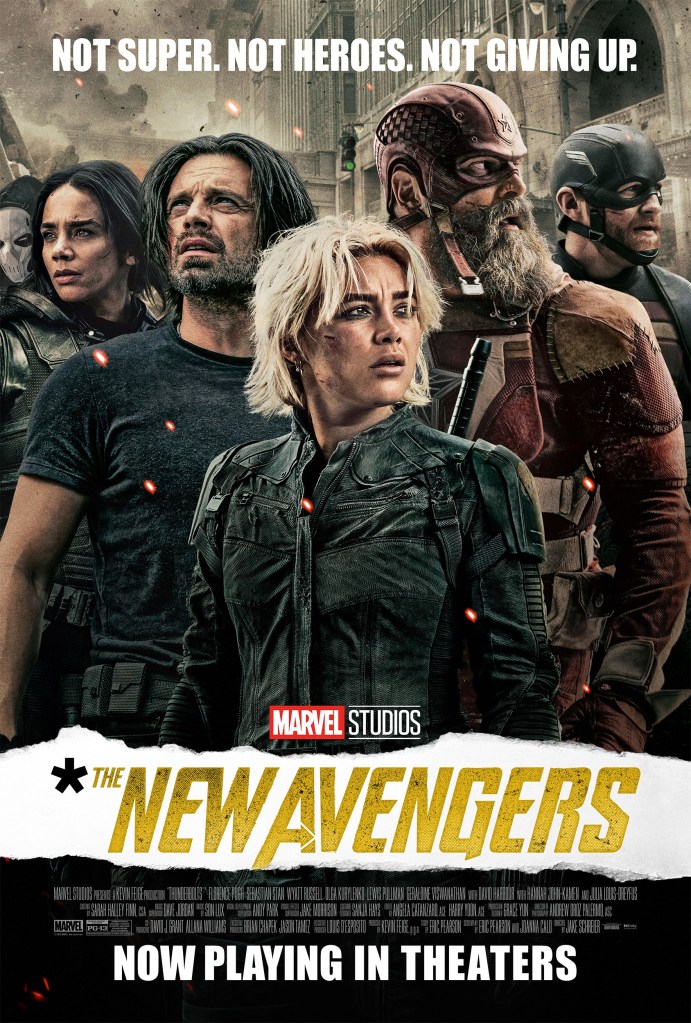
In a refreshing departure from the multiverse-spanning sagas and often lighthearted banter of recent Marvel Cinematic Universe entries, “Thunderbolts”* emerges as a surprisingly grounded and emotionally resonant film. Directed by Jake Schreier, this ensemble piece brings together a collection of anti-heroes and morally ambiguous figures, forcing them to confront not just external threats, but the profound psychological scars and memories that define them. Critics have largely lauded the film for its bold dive into mental health, trauma, and the complex inner lives of its characters, signaling a potentially new direction for the MCU.
The film’s premise sees Yelena Belova (Florence Pugh), Bucky Barnes (Sebastian Stan), Red Guardian (David Harbour), Ghost (Hannah John-Kamen), Taskmaster (Olga Kurylenko), and John Walker (Wyatt Russell) ensnared in a dangerous mission orchestrated by the manipulative CIA director Valentina Allegra de Fontaine (Julia Louis-Dreyfus). What initially appears to be a standard team-up quickly unravels into a fight for survival that compels each member to confront the “darkest corners of their pasts.”
Unpacking the Psyche: Trauma, Loneliness, and Redemption
“Thunderbolts*” distinguishes itself by making mental health and trauma central to its narrative. Reviewers consistently highlight how the film “plunge[s] so deeply into its characters’ mental health issues,” treating them with a “sincere and heartfelt” approach. This is not merely a plot device but a fundamental aspect of who these characters are and how they operate.
- Yelena Belova (Florence Pugh): As the film’s emotional anchor, Yelena’s journey is deeply rooted in her past as a Black Widow assassin. She grapples with the grim memories of her indoctrination, including a particularly haunting flashback where she was forced to lead a friend to their death. Her coping mechanisms, like throwing herself into work and alcohol, are depicted as a desperate attempt to avoid her pain, leading to a “psychological dissociation” and a sense of “emptiness.” The film beautifully explores her search for connection and redemption, portraying her as a “broken figure” who yearns for purpose beyond her violent past.
- Bob / The Sentry / The Void (Lewis Pullman): Perhaps the most psychologically complex character, Bob embodies the film’s exploration of mental illness. He is a former addict with immense power, but also carries a “deep inner pain” from an abusive childhood. His alter ego, The Void, is a literal manifestation of his “depression and insecurities,” capable of trapping people in “pocket dimensions based on their worst memories.” The film delves into Bob’s internal struggle, showing how his avoidance of traumatic memories leads to his destructive tendencies. The climax, where Yelena enters Bob’s consciousness to confront his past, is a surreal and impactful sequence that visually represents the battle against internalized trauma.
- Red Guardian (David Harbour): Alexei struggles with feelings of inadequacy and being a “failed father” figure. His desire to restore former greatness and his complex relationship with Yelena add layers to his character, showing a man stuck in the past yet striving for connection.
- John Walker (Wyatt Russell): The film delves into the fallout of Walker’s past actions, revealing how untreated trauma has led to his boastful demeanor and the dissolution of his family life.
- Ghost (Hannah John-Kamen): Her struggles with her artificial origins and the fear of never being complete are also touched upon, adding to the ensemble’s collective sense of brokenness.
The film uses Bob’s unique ability to access others’ darkest memories as a narrative device, forcing characters to relive their past regrets and traumas. This not only provides audiences with a deeper understanding of their motivations but also highlights how “past traumas can be detrimental long after they’re over.”
A Shift in the MCU’s Emotional Landscape
“Thunderbolts*” is praised for its willingness to embrace “dark human emotions” and explore themes of loneliness, grief, and the importance of companionship. It’s a film that suggests “human connection really was powerful enough to save the world,” emphasizing that even the strongest individuals “sometimes need help.” This focus on the “human elements” over excessive CGI spectacle marks a welcome shift for many critics, who see it as a return to the character-driven storytelling that defined earlier phases of the MCU.
While the film is not without its minor flaws – some critics note an “unwieldy jumble” in its initial act, a “drab” visual palette, and some “formulaic” plot points – its commitment to exploring the psychological dimensions of its anti-heroes makes it a “refreshing misfit hit.” “Thunderbolts*” is lauded as “one of the best MCU movies in a long time,” offering a “genuinely emotional story” that resonates with audiences and provides a compelling look at what happens when flawed individuals are forced to confront their inner demons and find strength in unity.

Leave a comment